Education Abroad Academic Advising
We are dedicated to facilitating early and thorough planning concerning academic pursuits abroad and degree progression for science and engineering students. Throughout this planning process, Education Abroad Advisors guide you in establishing academic objectives and exploring how studying abroad can help achieve these goals.
/0x226:4032x2798/prod01/channel_34/media/seattle-university/academics/education-abroad/photos/Picture2.jpg)
Resources for College of Science and Engineering
Seattle University offers a diverse range of Global Partner and Faculty-Led programs around the world. This guide outlines recommended courses for consideration during international study. As students take an active role in their academic journey, we offer comprehensive resources for academic planning and encourage collaboration with their Academic Advisors to explore and select the most suitable options for their abroad experience. Explore the full list of programs: Explore Programs!
Education Abroad & Academic Advising
An important supporter of the student experience abroad is the academic advisor. During the Exploration phase, students should discuss their desire to study abroad with their advisor to determine the best term for their experience, identify courses to complete abroad, and plan their remaining academic coursework to ensure timely degree completion. Additionally, students can review Seattle University's program requirements to identify which upper-level major courses they need to complete at the university.
- Review your Program Evaluation by going to Plan your Degree and Schedule your courses on MySeattleU
- Explore Undergraduate Science and Engineering Program Requirements- Sample 4-year and 2-year plans
- Select the desired program card, scroll down to learn the Degree at a Glance,select the degree type
When identifying courses to complete abroad, the EAO Historic Course Equivalency Search, can provide insight into courses that other students have previously taken. Although this list is not exhaustive, it can help students estimate the likelihood of similar courses being offered in the future.
Seattle University students typically go abroad Fall Semester, and depending on student's majors, Science and Engineering Undergraduate Students go abroad during:
- 2nd Year
- Summers
However, this may vary by major, view specific recommended abroad term in Major Recommendations below highlighted programs section
Students must meet with their academic advisor to discuss their individualized academic degree plan to determine the best term to go abroad.
Highlighted Programs
Consult the program's website for up-to-date course listings. All Global Partner and Independent program courses taken abroad must be approved by Seattle University Academic Departments prior to going abroad. Contact Education Abroad Office for more information about costs and application steps.
/0x0:382x508/prod01/channel_34/media/seattle-university/academics/education-abroad/photos/cards---photos/3.png)
Study in New Zealand
A Global Partner program at University of Auckland with a variety of STEM courses to choose from.
/0x0:382x508/prod01/channel_34/media/seattle-university/academics/education-abroad/photos/cards---photos/2.png)
Sogang University Exchange
A Global Partner program at Sogang University Exchange in Seoul, South Korea. Complete UCOR and Computer Science or Engineering Courses taught in English.
/0x0:382x508/prod01/channel_34/media/seattle-university/academics/education-abroad/photos/cards---photos/Morocco.png)
Summer UCOR in Morocco & Spain
Earn credit for UCOR 2600, UCOR 3100, or UCOR 3200 over the summer starting in Morocco and traveling north to end in Spain!
Highlighted Program for Biochemistry (Only as an example and not guaranteed)
 On Global Partner program with Semester at Pontificia Universidad Catolica del Peru + Community Engagement, students can take UCOR 2400, UCOR 2600, UCOR 3100, UCOR 3200 and Chemistry/Biology Elective (i.e. Biochemistry II: Metabolism and Nutrition, Marine Biotechnology, Proteomics, etc.), and/or General Electives
Suggested Terms Aboard
Students majoring in Biochemistry seem to have the most flexibility their:
- 2nd Year
- 4th Year - Fall Semester
- Summer
Suggested Courses to Save to Take Abroad (subject to term and courses changes by program/university)
- UCOR 2300, 2400, 2600, 3100, 3200
- General Electives
- Chemistry/Biology Electives
- Finding a program with unique Chemistry/Biology courses related to students' field of study/career interest.
In the past, students in this major have been able to take the following courses abroad, this is not a comprehensive list of courses taken abroad and is subject to change. You will still have to meet with your Academic Advisor to go over your specific academic plan.
- Chemistry Electives - as approved by Departmental Approver
- CHEM 1500 - General Chemistry I
- CHEM 1501 - General Chemistry I Lab
- CHEM 2800 - Forensic Science
- CHEM 3600 - Introductory Biochemistry
- Biology Electives - as approved by Departmental Approver
- BIOL 1010 - Principles of Biology
- BIOL 1610 - Molecular and Cellular Biology
- BIOL 1611 - Molecular and Cellular Biology Lab
- Biology Elective - 2000 Level
- BIOL 2100 - Principles of Microbiology
- BIOL 2200 - Anatomy and Physiology I
- BIOL 2210 - Anatomy and Physiology II
- BIOL 2520 - Plant Systematics
- BIOL 2600 - Ecology
- BIOL 2700 - Genetics
- BIOL 3650 - Marine Biology
- BIOL 3800 - Animal Behavior
- BIOL 3820 - Neurobiology
- BIOL 3850 - Plant Physiology
- Biology Elective - 3000 Level
- BIOL 4640 - Aquatic Ecology
- BIOL 4650 - Conservation Biology
- BIOL 4660 - Tropical Ecology
- BIOL 4670 - Wildlife Biology
- BIOL Electives - as approved by Departmental Approver
Highlighted Program for B.A. Biology(Only as an example and not guaranteed)
 On Global Partner program with SIT Global Health and Human Rights in Kenya, students are able to take Comparative Healthcare Systems, Kiswahili, Epidemiology in Kenya, and develop an Independent Study Project within their own interest (Neglected Tropical Diseases in Western Kenya, Maternal and Child Health, etc.) as well as courses for UCOR 3200.
Highlighted Program for B.S. Biology(Only as an example and not guaranteed)
 On Global Partner program with WorldStrides Semester at Korea University in Seoul, South Korea, students can take UCOR 3100, UCOR 2400, UCOR 2600, UCOR 3200 (Korean Language), Physics, Major electives (Evolutionary Biology, General Microbiology, etc.) and/or General Electives.
Recommendation for Biology B.A.
Students majoring in a BA in Biology have more flexibility as there are more general electives built into the academic plan. Students are able to take courses that are relevant to their academic/career goals. For example, perhaps the education abroad goal is to have more field experience, therefore taking an internship or research course would count as a general elective as well as help the student gain hands-on experience in their field of study.
Suggested Terms Aboard
Since there is more flexibility, BA in Biology students are able to go abroad during their:
- 2nd year
- 3rd year
- Summers
Suggested Courses to Save to Take Abroad (subject to term and courses changes by program/university)
- UCOR 2300, 2400, 2600, 3100, 3200
- General Electives
- Biology Major Electives
- Science Electives
Recommendation for Biology B.S.
Since students majoring in a B.S. in Biology will have fewer general electives, finding a program that might have 1-2 biology major courses would be a simple way to stay on track
Suggested Terms Aboard
Since there is more flexibility, BA in Biology students are able to go abroad during their:
- 2nd Year
- Summers
Suggested Courses to Save to Take Abroad (subject to term and courses changes by program/university)
- UCOR 2300, 2400, 2600, 3100, 3200
- Biology Major Electives
- Department Requirements
- General Electives
Recommendation for Biology Minor
Suggested Terms Aboard
Depending on the student's Major, Biology minor students typically go abroad during:
- 2nd Year
- 3rd Year
- 4th Year
- Summer
Suggested Courses to Save to Take Abroad (subject to term and courses changes by program/university)
- UCOR 2300, 2400, 2600, 2800 (if applicable), 3100, 3200
- (Credits from UCOR courses may simultaneously fulfill Core and minor requirements)
- Biology with lab Electives (= UCOR 2800/3200)
*Detailed planning will have to be planned out for smooth course sequencing upon return. Students are able to go abroad during Fall Semester to complete the first courses (ie. BIOL 1610 & BIOL 1611) abroad and return to SU to complete the series, depending on the abroad program.
In the past, students in this major have been able to take the following courses abroad, this is not a comprehensive list of courses taken abroad and is subject to change. You will still have to meet with your Academic Advisor to go over your specific academic plan.
- BIOL 1410 - Biology I: Molecular and Cellular Biology
- BIOL 1411 - Biology Lab I
- BIOL 1620 - Biology II: Evolution and Ecology
- BIOL 1621 - Biology Lab II
- BIOL 1630 - Biology III: Physiology and Development
- BIOL 1631 - Biology Lab III
- Biology Electives - as approved by Departmental Approver
- Biology Elective - 2000 Level
- BIOL 2100 - Principles of Microbiology
- BIOL 2200 - Anatomy and Physiology I
- BIOL 2210 - Anatomy and Physiology II
- BIOL 2520 - Plant Systematics
- BIOL 2600 - Ecology
- BIOL 2700 - Genetics
- BIOL 3650 - Marine Biology
- BIOL 3800 - Animal Behavior
- BIOL 3820 - Neurobiology
- BIOL 3850 - Plant Physiology
- Biology Elective - 3000 Level
- BIOL 4640 - Aquatic Ecology
- BIOL 4650 - Conservation Biology
- BIOL 4660 - Tropical Ecology
- BIOL 4670 - Wildlife Biology
- BIOL Electives - as approved by Departmental Approver
Highlighted Program for Cell & Molecular Biology (Only as an example and not guaranteed)
 On Global Partner program with WorldStrides Semester at Universidad Catolica de Valencia in Valencia, Spain, students can take UCOR 2400, UCOR 2600, UCOR 3100, UCOR 3200, Biology Electives (Genetic and Molecular Biology, Molecular Genetics, Stem cells: Origin and Practical Applications, etc.), and/or General Elective.
Suggested Terms Aboard
Students majoring in Cell & Molecular Biology seem to have the most flexibility their
- 4th Year - Fall Semester
- Summers
Suggested Courses to Save to Take Abroad (subject to term and courses changes by program/university)
- UCOR 2300, 2400, 2600, 3100, 3200
- Biology Electives
- Departmental Requirement (Physics, Chemistry, Math)
- General Elective
In the past, students in this major have been able to take the following courses abroad, this is not a comprehensive list of courses taken abroad and is subject to change. You will still have to meet with your Academic Advisor to go over your specific academic plan.
- Biology Electives - as approved by Departmental Approver
- BIOL 1010 - Principles of Biology
- BIOL 1610 - Molecular and Cellular Biology
- BIOL 1611 - Molecular and Cellular Biology Lab
- Biology Elective - 2000 Level
- BIOL 2100 - Principles of Microbiology
- BIOL 2200 - Anatomy and Physiology I
- BIOL 2210 - Anatomy and Physiology II
- BIOL 2520 - Plant Systematics
- BIOL 2600 - Ecology
- BIOL 2700 - Genetics
- BIOL 3650 - Marine Biology
- BIOL 3800 - Animal Behavior
- BIOL 3820 - Neurobiology
- BIOL 3850 - Plant Physiology
- Biology Elective - 3000 Level
- BIOL 4640 - Aquatic Ecology
- BIOL 4650 - Conservation Biology
- BIOL 4660 - Tropical Ecology
- BIOL 4670 - Wildlife Biology
- BIOL Electives - as approved by Departmental Approver
Highlighted Program for Chemical Science (Only as an example and not guaranteed)
 On Global Partner program WorldStrides Semester at Kingston University in London, England, students can take UCOR 2400, UCOR 2600, UCOR 3100, UCOR 3200, Biology electives (Clinical Immunology and Medical Microbiology, Molecular Biology of the Cell, etc.), Chemistry electives (Foundational Chemistry for Pharmaceutical Science, Inorganic Chemistry, etc.) or General Electives
Recommendation for Chemical Science
Suggested Terms Aboard
Depending on student's credits and how they can shift some of your major requirements to another term at Seattle U, Chemical Science students can consider:
- 2nd year
- 3rd Year - Spring Semester
- Summers
Suggested Courses to Save to Take Abroad (subject to term and courses changes by program/university)
- UCOR 2300, 2400, 2600, 3100, 3200
- Organic Chemistry
- Physics
- Thermodynamics
- General Elective
If students opt to take major courses abroad, they have previously been able to choose from the following courses. This is not a comprehensive list of courses taken abroad and is subject to change. You will still have to meet with your Academic Advisor to go over your specific academic plan.
- Chemistry Electives - as approved by Departmental Approver
- CHEM 1500 - General Chemistry I
- CHEM 1501 - General Chemistry I Lab
- CHEM 2800 - Forensic Science
- CHEM 3600 - Introductory Biochemistry
- Biology Electives - as approved by Departmental Approver
- BIOL 1010 - Principles of Biology
- BIOL 1610 - Molecular and Cellular Biology
- BIOL 1611 - Molecular and Cellular Biology Lab
- Biology Elective - 2000 Level
- BIOL 2100 - Principles of Microbiology
- BIOL 2200 - Anatomy and Physiology I
- BIOL 2210 - Anatomy and Physiology II
- BIOL 2520 - Plant Systematics
- BIOL 2600 - Ecology
- BIOL 2700 - Genetics
- BIOL 3650 - Marine Biology
- BIOL 3800 - Animal Behavior
- BIOL 3820 - Neurobiology
- BIOL 3850 - Plant Physiology
- Biology Elective - 3000 Level
- BIOL 4640 - Aquatic Ecology
- BIOL 4650 - Conservation Biology
- BIOL 4660 - Tropical Ecology
- BIOL 4670 - Wildlife Biology
- BIOL Electives - as approved by Departmental Approver
Highlighted Program for Chemical Science (Only as an example and not guaranteed)
 On Global Partner program at University of Auckland in New Zealand, students can take UCOR 2400, UCOR 2600, UCOR 3100, UCOR 3200, Chemistry Elective (ie. Physical and Material Chemistry, Organic Chemistry, Inorganic Compounds: Structure, Bonding and Reactivity, etc.) or General Electives (i.e. Pacific Music and Dance, etc.)
Highlighted Program for B.S. Chemistry (Only as an example and not guaranteed)
 On Global Partner program USAC in Cork at University Cork College in Cork, Ireland, students can take UCOR 2300, UCOR 2400, UCOR 2600, UCOR 3100, UCOR 3200, Chemistry Electives (Organic Chemistry, Environmental chemistry and Analysis, etc.)
Recommendation for Chemistry
Suggested Terms Aboard
Students majoring in Chemistry seem to have the most flexibility their:
- 2nd Year
- 4th Year Fall Semester
- Summers
Suggested Courses to Save to Take Abroad (subject to term and courses changes by program/university)
- UCOR 2300, 2400, 2600, 3100, 3200
- Organic Chemistry
- Physics
- General Elective
If students opt to take major courses abroad, they have previously been able to choose from the following courses. This is not a comprehensive list of courses taken abroad and is subject to change. You will still have to meet with your Academic Advisor to go over your specific academic plan.
- Chemistry Electives - as approved by Departmental Approver
- CHEM 1500 - General Chemistry I
- CHEM 1501 - General Chemistry I Lab
- CHEM 2800 - Forensic Science
- CHEM 3600 - Introductory Biochemistry
- CHEM Electives - as approved by Departmental Approver
Highlighted Program for Civil Engineering (Only as an example and not guaranteed)
 On Global Partner program at Sogang University Exchange in Seoul, South Korea, students can take UCOR 2400, UCOR 2600, UCOR 3100, UCOR 3200, Fluid Mechanics, Linear Algebra.
Highlighted Program for Environmental Engineering (Only as an example and not guaranteed)
On Global Partner program with USAC at University Cork College, students can take UCOR 2400, UCOR 2600, UCOR 3100, UCOR 3200, Multivariable Calculus, and Civil Engineering Elective (i.e. Sustainable Engineering)
Recommendation for Civil Engineering
Suggested Terms Aboard
Depending on student's credits and how they can shift some of the Civil Engineering requirements to another term at Seattle U, Civil Engineering students can consider:
- 2nd Year - Fall Semester
- 3nd Year - Fall Semester
- Summers
Suggested Courses to Save to Take Abroad (subject to term and courses changes by program/university)
- UCOR 2300, 2400, 2600, 3100, 3200
- Departmental Requirement (Chemistry, Mathematics)
- Civil Engineering Electives
- General Elective
Recommendation for Environmental Engineering
Suggested Terms Aboard
Depending on student's credits and how they can shift some of the Environmental Engineering requirements to another term at Seattle U, Environmental Engineering students can consider:
- 2nd Year - Fall Semester
- Summers
Suggested Courses to Save to Take Abroad (subject to term and courses changes by program/university)
- Major:
- UCOR 2300, 2400, 2600, 2800, 3100, 3200
- Departmental Requirement (Chemistry, Mathematics)
- Civil Engineering Electives
- General Elective
- Minor:
- UCOR 2300, 2400, 2600, 2800, 3100, 3200 (Credits from UCOR courses may simultaneously fulfill Core and minor requirements)
- Environmental Engineering Electives (=UCOR 2800/3200)
In the past, students in this major have been able to take the following courses abroad, this is not a comprehensive list of courses taken abroad and is subject to change. You will still have to meet with your Academic Advisor to go over your specific academic plan.
- Civil Engineering (examples of courses previously approved)
- CEEGR 3260 - Transportation Engineering
- CEEGR 3310 - Fluid Mechanics
- CEEGR 3530 - Soil Mechanics
- CEEGR 3860 - Sustainable Engineering
- CEEGR 4550 - Foundation Design
- Civil Engineering Electives - as approved by Departmental Approver
- Environmental Engineering Electives - as approved by Departmental Approver
Highlighted Program for Computer Engineering (Only as an example and not guaranteed)
On Global Partner program at University of Auckland in Auckland, New Zealand, students can take UCOR 2400, UCOR 2600, UCOR 3100, UCOR 3200, Electrical Circuits II, Electrical Engineering Elective (Engineering Electromagnetics, Analogue and Digital Design, Electronics 1, etc.)
Recommendation for Computer Engineering
Suggested Terms Aboard
Depending on student's credits and how they can shift some of the Computer Engineering requirements to another term at Seattle U, Computer Engineering students can consider:
- 2nd Year - Fall Semester
- Summers
Suggested Courses to Save to Take Abroad (subject to term and courses changes by program/university)
- Major:
- UCOR 2300, 2400, 2600, 3100, 3200
- Electrical Engineering Elective
- Department Requirements (Physics, Math)
- Minor:
- UCOR 2300, 2400, 2600, 3100, 3200
- Electrical Engineering Electives
In the past, students in this major have been able to take the following courses abroad, this is not a comprehensive list of courses taken abroad and is subject to change. You will still have to meet with your Academic Advisor to go over your specific academic plan.
- Engineering Electives (examples of courses previously approved)
- ECEGR 3110 - Electrical Circuits II
- ECEGR 3111 - Laboratory I: Circuits
- ECEGR 3210 - Embedded Systems
- ECEGR 3710 - Signals and Systems
- ECEGR 4750 - Machine Learning I: Optimization, Prediction, and Pattern Recognition in Complex Systems
- ECEGR Electives - as approved by Departmental Approver
Highlighted Program for B.A. Computer Science (Only as an example and not guaranteed)
 On Global Partner program with WorldStrides Semester at University of Western Cape in Cape Town, South Africa, students can take UCOR 2400, UCOR 2600, UCOR 3100, UCOR 3200, Computer Science Electives, and/or General Elective.
Highlighted Program for B.S. Computer Science (Only as an example and not guaranteed)
 On Global Partner program with WorldStrides Semester at Yamanashi Gakuin University in Kofu, Japan, students can take UCOR 2400, UCOR 2600, UCOR 3100, UCOR 3200, Computer Science Electives (Data Visualization Techniques in Python, Machine Learning, etc.) and/or General Electives
Recommendation for Computer Science B.A.
Students majoring in a B.A. in Computer Science have more flexibility as there are more general electives built into the academic plan. Students are able to take courses that are relevant to their academic/career goals. For example, perhaps the education abroad goal is to have more field experience, therefore taking an internship or research course would count as a general elective as well as help the student gain hands-on experience in their field of study.
Suggested Terms Aboard
Since there is more flexibility, BA in Computer Science students are able to go abroad during their:
- 2nd year
- 3rd year
- Summers
Suggested Courses to Save to Take Abroad (subject to term and courses changes by program/university)
- UCOR 2300, 2400, 2600, 2800, 3100, 3200
- General Electives
- Computer Science Major Electives
- Department Requirements (Math)
Recommendation for Computer Science B.S.
Since students majoring in a B.S. in Computer Science will have fewer general electives, depending on what courses remain, students may want to focus on their UCOR III courses.
Suggested Terms Aboard
>BS in Computer Science students are able to go abroad during their:
- 2nd year - Fall Semester
- 3rd year - Fall Semester
- Summers
Suggested Courses to Save to Take Abroad (subject to term and courses changes by program/university)
- UCOR 2300, 2400, 2600, 2800, 3100, 3200
- General Electives
- Computer Science Major Electives
- Department Requirements (Math, Physics, Biology, Chemistry)
Recommendation for Computer Science Minor
Suggested Terms Aboard
Depending on the student's Major, Biology minor students typically go abroad during:
- 2nd Year
- 3rd Year
- 4th Year
- Summer
Suggested Courses to Save to Take Abroad (subject to term and courses changes by program/university)
- UCOR 2300, 2400, 2600, 2800, 3100, 3200 (Credits from UCOR courses may simultaneously fulfill Core and minor requirements)
- Computer Science with lab Electives (= UCOR 2800/3200)
In the past, students in this major have been able to take the following courses abroad, this is not a comprehensive list of courses taken abroad and is subject to change. You will still have to meet with your Academic Advisor to go over your specific academic plan.
- Computer Science Electives (examples of courses previously approved)
- CPSC 1220 - Data-Driven Programming
- CPSC 2300 - Introduction to Databases
- CPSC 2430 - Data Structures
- CPSC 2600 - Foundations of Computer Science
- CPSC 3300 - Foundations of Databases
- CPSC 3400 - Languages and Computation
- CPSC 3500 - Computing Systems
- CPSC 4100 - Design and Analysis of Algorithms
- CPSC 4250 - Mobile Software Development
- CPSC 4270 - Graphics/Game Project
- CPSC 4310 - Machine Learning
- CPSC 4510 - Computer Networks
- CPSC 4530 - Embedded Systems
- CPSC 4610 - Artificial Intelligence
- CPSC 4710 - Security in Computing
- CPSC Electives - as approved by Departmental Approver
Highlighted Program for Humanitarian Engineering (Only as an example and not guaranteed)
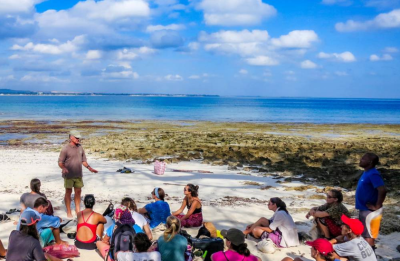 On Global Partner Program with SIT's Coastal Ecology and Natural Resource Management, students can Coastal Ecology and Natural Resources Management Seminar, Kiswahili, Environmental Research Methods and Ethics, and develop their own Independent Study Project in their topic of interest (examples: "Sustainable use of natural resources for building materials", "Solar Energy Adoption in Unguja, Tanzania: Influence of Awareness, Socioeconomics, and Technology Knowledge", etc.) as well as courses to satisfy UCOR 3200
Suggested Terms Aboard
Depending on the student's Major, Humanitarian Engineering minor students typically go abroad during
- 2nd Year
- Summers
Suggested Courses to Save to Take Abroad (subject to term and courses changes by program/university)
- Minor:
- UCOR 2300, 2400, 2600, 3100, 3200 (Credits from UCOR courses may simultaneously fulfill Core and minor requirements)
- Non-Technical Breadth Elective (= UCOR 2400/2600/3200)
- Technical Depth Electives: including Environmental Science, Civil Engineering, Electrical Engineering, or Mechanical Engineering
- UCOR 2300, 2400, 2600, 3100, 3200 (Credits from UCOR courses may simultaneously fulfill Core and minor requirements)
In the past, students in this major have been able to take the following courses abroad, this is not a comprehensive list of courses taken abroad and is subject to change. You will still have to meet with your Academic Advisor to go over your specific academic plan.
- Technical Depth Electives (examples of courses previously approved)
- ECEGR 3110 - Electrical Circuits II
- ECEGR 4750 - Machine Learning I: Optimization, Prediction, and Pattern Recognition in Complex Systems
- ENSC 3500 - Introduction to Geographic Information Systems
- ENSC 3800 - Aerial Imaging and Mapping
- MEGR 3210 - Thermodynamics
- ECEGR Electives - as approved by Departmental Approver
- CEEGR Electives - as approved by Departmental Approver
- ENSC Electives - as approved by Departmental Approver
- MEGR Electives - as approved by Departmental Approver
- Non-Technical Breadth Elective
- ANSO 2000 - Introduction to Anthropology and Sociology
- ANTH 2120 - Cultural Anthropology
- EVST 1600 - Sustainability, People, and the Environment
- EVST 4740 - International Environmental Governance
- FREN 1150 - French Language I
- History Electives
- International Studies Elective
- Political Science Elective
- Public Affairs Elective
- SPAN 1150 - Spanish Language I
- UCOR courses
Highlighted Program for Electrical Engineering (Only as an example and not guaranteed)
On Global Partner program with USAC at University Cork College, students can take UCOR 2400, UCOR 2600, UCOR 3100, UCOR 3200, Linear Circuit Analysis (ECEGR 3110), Linear Algebra, and or Electrical Engineering Electives (Telecommunications, Biomedical Systems, etc.)
Suggested Terms Aboard
Students majoring in Electrical Engineering seem to have the most flexibility their:
- 4th Year - Fall Semester
- Summers
Suggested Courses to Save to Take Abroad (subject to term and courses changes by program/university)
- Major:
- UCOR 2300, 2400, 2600, 3100, 3200
- Electrical Engineering Elective
- Department Requirements (Physics, Math)
- Minor:
- UCOR 2300, 2400, 2600, 2800 (if applicable), 3100, 3200 (Credits from UCOR courses may simultaneously fulfill Core and minor requirements)
- Electrical Engineering Electives (=UCOR 2800/3200)
In the past, students in this major have been able to take the following courses abroad, this is not a comprehensive list of courses taken abroad and is subject to change. You will still have to meet with your Academic Advisor to go over your specific academic plan.
- Engineering Electives (examples of courses previously approved)
- ECEGR 3110 - Electrical Circuits II
- ECEGR 3111 - Laboratory I: Circuits
- ECEGR 3210 - Embedded Systems
- ECEGR 3710 - Signals and Systems
- ECEGR 4750 - Machine Learning I: Optimization, Prediction, and Pattern Recognition in Complex Systems
- ECEGR Electives - as approved by Departmental Approver
Highlighted Program for Environmental Science minor (Only as an example and not guaranteed)
On Global Partner Program with SIT's Coastal Ecology and Natural Resource Management, students can Coastal Ecology and Natural Resources Management Seminar, Kiswahili, Environmental Research Methods and Ethics, and develop their own Independent Study Project in their topic of interest (examples: Pesticide Use and Awareness, Ecological Impact of Salt Farming, An Assessment of Community-based Ecological Monitoring, etc.) as well as courses to satisfy UCOR 3200
Suggested Terms Aboard
Depending on the student's Major, Environmental Science minor students typically go abroad during:
- 2nd Year
- Summers
Suggested Courses to Save to Take Abroad (subject to term and courses changes by program/university)
- Minor:
- UCOR 2300, 2400, 2600, 2800 (if applicable), 3100, 3200 (Credits from UCOR courses may simultaneously fulfill Core and minor requirements)
- Environmental Science with lab Electives (= UCOR 2800/3200)
In the past, students in this major have been able to take the following courses abroad, this is not a comprehensive list of courses taken abroad and is subject to change. You will still have to meet with your Academic Advisor to go over your specific academic plan.
- Biology Series Courses
- Chemistry Series Courses
- Physics Series Courses
- Biology Electives (examples of courses previously approved)
- BIOL 2600 - Ecology
- BIOL 4620 - Marine Ecology
- BIOL 4630 - Forest Ecology
- BIOL 4640 - Aquatic Ecology
- BIOL 4660 - Tropical Ecology
- BIOL Electives- as approved by Departmental Approvers
- Environmental Science Electives (examples of courses previously approved)
- ENSC 1500 - Environmental Field Methods
- ENSC 3300 - Natural Systems
- ENSC 3500 - Introduction to Geographic Information Systems
- ENSC 3760 - Environmental Law and Impact Studies
- ENSC 3800 - Aerial Imaging and Mapping
- ENSC Electives - as approved by Departmental Approvers
Highlighted Program for Marine and Conservation Biology (Only as an example and not guaranteed)
 On Global Program program with SIT Tropical Ecology, Marine Ecosystem, and Biodiversity Conservation, students are able to take Human Ecology and Conservation in the Tropics, Comparative Tropical Ecology, Spanish for the Natural Sciences, Environmental Research Methods and Ethics, and develop an Independent Study Project within their own interest (Ethnobotany, Regeneration of Canopy Emergents in Primary Forests, Mangrove Health, etc.), as well as courses to satisfy UCOR 3200
Suggested Terms Aboard
Marine and Conservation Biology students are able to go abroad during their:
- 2nd year
- 3rd year
- Summers
Suggested Courses to Save to Take Abroad (subject to term and courses changes by program/university)
- UCOR 2300, 2400, 2600, 3100, 3200
- Biology Electives
- Social Science/Humanities Electives
- General Electives
*Detailed planning will have to be planned out for smooth course sequencing upon return. Students are able to go abroad during Fall Semester to complete the first courses (ie. BIOL 1610 & BIOL 1611) abroad and return to SU to complete the series, depending on the abroad program.
In the past, students in this major have been able to take the following courses abroad, this is not a comprehensive list of courses taken abroad and is subject to change. You will still have to meet with your Academic Advisor to go over your specific academic plan.
- BIOL 1410 - Biology I: Molecular and Cellular Biology
- BIOL 1411 - Biology Lab I
- BIOL 1620 - Biology II: Evolution and Ecology
- BIOL 1621 - Biology Lab II
- BIOL 1630 - Biology III: Physiology and Development
- BIOL 1631 - Biology Lab III
- Biology Electives - as approved by Departmental Approver
- Biology Elective - 2000 Level
- BIOL 2100 - Principles of Microbiology
- BIOL 2200 - Anatomy and Physiology I
- BIOL 2210 - Anatomy and Physiology II
- BIOL 2520 - Plant Systematics
- BIOL 2600 - Ecology
- BIOL 2700 - Genetics
- BIOL 3650 - Marine Biology
- BIOL 3800 - Animal Behavior
- BIOL 3820 - Neurobiology
- BIOL 3850 - Plant Physiology
- Biology Elective - 3000 Level
- BIOL 4640 - Aquatic Ecology
- BIOL 4650 - Conservation Biology
- BIOL 4660 - Tropical Ecology
- BIOL 4670 - Wildlife Biology
- BIOL Electives - as approved by Departmental Approver
Highlighted Program for Mathematics (Only as an example and not guaranteed)
 On Global Partner program WorldStrides Semester at Vrije Universiteit Amsterdam in Amsterdam, Netherlands, students can take UCOR 2400, UCOR 2600, UCOR 3100, UCOR 3200, Math Elective (Discrete Mathematics, Operations Research, Non-linear Dynamical Systems, etc.) and/or General Elective.
Recommendation for Mathematics
Students majoring in Mathematics have more flexibility as there are more general electives built into the academic plan. Students are able to take courses that are relevant to their academic/career goals. For example, perhaps the education abroad goal is to have more field experience, therefore taking an internship or research course would count as a general elective as well as help the student gain hands-on experience in their field of study.
Suggested Terms Aboard
Since there is more flexibility, BA in Mathematics students are able to go abroad during their:
- 2nd year
- 3rd year
- 4th year - Fall Semester
- Summers
Suggested Courses to Save to Take Abroad (subject to term and courses changes by program/university)
- UCOR 2300, 2400, 2600, 3100, 3200
- General Electives
- Mathematics Electives
*Detailed planning will have to be planned out for smooth course sequencing upon return. Below are a list of courses that students have taken in the past, this is not a comprehensive list and is subject to change.
In the past, students in this major have been able to take the following courses abroad, this is not a comprehensive list of courses taken abroad and is subject to change. You will still have to meet with your Academic Advisor to go over your specific academic plan.
- MATH 1336 - Calculus III
- MATH 2310 - Probability and Statistics for the Sciences and Engineering
- MATH 2320 - Linear Algebra
- MATH 2330 - Multivariable Calculus
- MATH 2340 - Differential Equations
- MATH Electives - 3000 Level - as approved by Departmental Approvers
- MATH 3411 - Probability
- MATH 3440 - Non-linear Systems and Modeling
- MATH 3450 - Introduction to Numerical Methods
- MATH 3455 - Asymptotic and Perturbation Methods
- MATH 4421 - Abstract Algebra I
- MATH 4431 - Real Analysis I
- MATH Electives - 4000 Level - as approved by Departmental Approvers
Departmental Requirements
- Computer Science Electives - as approved by Departmental Approvers
- Economics Electives - as approved by Departmental Approvers
- Psychology Electives - as approved by Departmental Approvers
- Natural Science Electives - as approved by Departmental Approvers
Highlighted Program for Mechanical Engineering (Only as an example and not guaranteed)
On Global Partner program WorldStrides Semester at Kingston University in London, England, students can take UCOR 2400, UCOR 2600, UCOR 3100, UCOR 3200, PHYS 1350, PHYS 1351, Dynamics, or Mechanical Engineering Electives (Computational Methods in Engineering and Control, Automotive Powertrain Systems, Solid Mechanics and Vibrations, etc.)
Recommendation for Mechanical Engineering
Students majoring in Mechanical Engineering seem to have the most flexibility their:
- 3rd Year - Fall Semester
- Summers
Suggested Courses to Save to Take Abroad (subject to term and courses changes by program/university)
- Major:
- UCOR 2300, 2400, 2600, 3100, 3200
- Mechanical Engineering Electives
- Departmental Requirement (Physics, Mathematics)
- Minor:
- UCOR 2300, 2400, 2600, 2800 (if applicable), 3100, 3200 (Credits from UCOR courses may simultaneously fulfill Core and minor requirements)
- Mechanical Engineering Electives (=UCOR 2800/3200)
In the past, students in this major have been able to take the following courses abroad, this is not a comprehensive list of courses taken abroad and is subject to change. You will still have to meet with your Academic Advisor to go over your specific academic plan.
- Mechanical Engineering Electives (examples of courses previously approved)
- MEGR 2100 - Statics
- MEGR 2300 - Dynamics
- MEGR 3500 - Material Science
- MEGR Electives - as approved by Departmental Approvers
Highlighted Program for B.A. Physics (Only as an example and not guaranteed)
On Global Partner program at University of Auckland in New Zealand, students can take UCOR 2400, UCOR 2600, UCOR 3100, UCOR 3200, Physics /Mathematics Elective (Physics of the Earth, Advancing Physics 2, Particle Physics and Astrophysics, etc.), and/or General Elective.
Highlighted Program for B.S. Physics (Only as an example and not guaranteed)
 On Global Partner program with CIEE Art and Science at University of Botswana in Gaborone, Botswana, students can take UCOR 2400, UCOR 2600, UCOR 3100, UCOR 3200, Physics/Mathematics Electives (Principles of Matter, Basic Thermodynamics and Introduction to Nuclear Physics, Physics of the Environment, Solid State Physics, etc.), and/or General Elective.
Recommendation for Physics B.A.
Suggested Terms Aboard
Since there is more flexibility, BA in Physics students are able to go abroad during their:
- 2nd year - Fall Semester
- 4th Year - Spring Semester
- Summers
Suggested Courses to Save to Take Abroad (subject to term and courses changes by program/university)
- UCOR 2300, 2400, 2600, 3100, 3200
- General Electives
- Physics Electives
- Department Requirement Electives (Mathematics)
Recommendation for Physics B.S.
Since students majoring in a B.S. in physics will have fewer general electives, so detailed planning will need to be accounted for.
Suggested Terms Aboard
- 2nd year - Fall Semester
- 4th year - Spring Semester
- Summers
Suggested Courses to Save to Take Abroad (subject to term and courses changes by program/university)
- UCOR 2300, 2400, 2600, 3100, 3200
- Physics Electives
- Department Requirement Electives (Mathematics)
- General Elective
*Detailed planning will have to be planned out for smooth course sequencing upon return. Students are able to go abroad during Fall Semester to complete the first courses (ie. PHYS 1210 & PHYS 1211) abroad and return to SU to complete the series, depending on the abroad program.
In the past, students in this major have been able to take the following courses abroad, this is not a comprehensive list of courses taken abroad and is subject to change. You will still have to meet with your Academic Advisor to go over your specific academic plan.
- PHYS 1210 - Mechanics
- PHYS 1211 - Mechanics Lab
- PHYS 1220 - Electricity and Magnetism
- PHYS 1221 - Electricity and Magnetism Lab
- PHYS 1230 - Waves and Optics
- PHYS 1231 - Waves and Optics Lab
Physics Electives (examples of courses previously approved)
- PHYS Electives - as approved by Departmental Approvers
Have Questions?
Kirsti advises College of Science & Engineering Students
Kirsti Ruud
Director
/0x0:360x460/prod01/channel_34/media/seattle-university/academics/education-abroad/photos/2.png)