IHSR Newsletter, Fall 2025
Written by Claire LeBeau, PhD, Editor Emeritus: Steen Halling, Assistant Editor: Diane Tomhave
Friday, December 5, 2025
International Human Science Research Newsletter
Table of Contents
- Greetings from the editor
- Report on the 2025 42nd IHSR Conference from the Conference Organizer, by Vibeke Østergaard Steenfeldt
- Business Meeting Notes from the 2025 Conference, University College Absalon, by Claire LeBeauInternational Human Science Research Conference History
- Information on the 43rd International Human Science Research Conference Summer of 2026 Conference, Montreal, Québec, Canada
- New Edition of the European Journal of Qualitative Research in Psychotherapy (EJQRP)
- New edition of the Phenomenology and Practice Journal
- Transdisciplinary Phenomenology Research Group
- Rocky Mountain Psychological Association Conference
- Society for Qualitative Inquiry in Psychology (SQIP) Conference
- World Congress of Existential Therapy June 3-6, 2026
- ICNAP – International Coalition of North American Phenomenologists
- European Congress of Qualitative Inquiry (ECQI)
- Latest Edition of Environmental and Architectural Phenomenology
- In Memoriam
- Changes to the IHSR Newsletter Archives
- Books
- Links/Connections
Deadline For Submissions To Fall 2026 Newsletter: October 1, 2026
Please email Dr. Claire LeBeau if your email address changes or if you wish to unsubscribe; also email her with material for the 2026 edition.
Please forward the link to the newsletter to interested colleagues.
Welcome to the 2025 IHSR Newsletter
“To serve the other, without much recognition, without self-promotion, is to allow ourselves to be commanded (interpellated), and thus brought into being, every day—both at home and far away. Many of us will call this an impossible life, and surely for any one of us, on any given day, it has its limits. Granted, but we see simple, extraordinary goodness every day, dependent on a capacity for ethical hearing nourished by reparative reading” – Donna M. Orange (2019, p. 125) Psychoanalysis, History, and Radical Ethics: Learning to Hear - Routledge
Dear Colleagues and Friends,
In this last year, we have experienced some tumultuous moments politically, environmentally, and in every aspect of our shared world together. We have also had to say goodbye to many Giants in our human science community. The above quote from our colleague and friend, Donna Orange, is especially prescient and profound in these grief-filled moments as we find our way to see, hear and stretch to respond to each other more and more “and thus be brought into being, every day—both at home and far away”. We continue to be nourished by this “ethical hearing” every year in our small and tenacious human science community.
Last August for the 42nd IHSR Conference, we were able to meet and gather once again in person at the City University College of Absalon in Roskilde, Denmark to explore the theme of Grasping Lived Experiences – What, Why, and How. Perhaps because we were still reeling from the post pandemic gaps and uncertainties, the year before at Molloy in New York, we did not have any clear idea where our next gatherings might be. Not knowing what or why or how a conference could take place, with Steen’s encouragement, Vibeke Østergaard Steenfeldt courageously stepped forward to say she would like to try. In a similar way this year, for next summer’s conference at the Université du Québec à Montréal Canada, it was Christian Thiboutot, with the emphatic encouragement of his students and colleagues, who stepped forward to continue to offer a possibility for us to carry on this poignant 43 year old legacy that has meant so much to us at different times throughout the years. These offers of generosity and hospitality continue to fill me with awe and deep gratitude for the work that you all are doing. I also feel inspired to keep building on the legacy of the immense shoulders of these Giants in whose memory we continue to honor and extend our research. We are their fondest dreams.
Over the last five years, we have been working hard to update the IHSR Newsletter listserv. It is important to note that, due to confidentiality and online privacy standards at many institutions, presenters and participants at the conferences are not automatically added to the IHSR emailing listserv, so please make sure to reach out to let us know that you would like to be included and what your preferred email contact is.
Thank you for all of your strivings and for continuing to reach for these moments when something new can grow within and between us. If there is anything I can do to help you share your work and participate in this network, please let me know by emailing me. Hope to see you again this next August in Montréal Canada. Until then, take such good care of yourselves.
Gratefully,
Claire LeBeau
Report from the Conference Organizer on the 2025 42nd IHSR Conference -University College Absalon, Roskilde, Denmark August 11- 15, 2025
Submitted by Vibeke Østergaard Steenfeldt, University College Absalon
The 42nd International Human Science Research Conference was hosted by University College Absalon, Roskilde, Denmark August 11- 15, 2025.
Conference theme
The theme was Grasping Lived Experiences – What, Why, and How. Grasping lived experiences involves the attempts to grasp at the deeper meaning embedded within the personal, subjective experiences of individuals as they navigate their world. These experiences are rich with significance, offering insight into how people perceive, interpret, and interact with their surroundings. However, questions arise: What exactly are these lived experiences, what scientific value do they hold, and how can they be explored in a way that aligns with phenomenological and hermeneutic ontology? These were some of the key questions discussed at this year’s conference.
Keynote speakers
Five keynote speakers addressed the conference theme in various ways: At the pre-conference workshop Finn Thorbjørn Hansen facilitated a Wonder Lab. Alfred Sköld held a keynote on Existential Perspectives on Love. Esben Bala Skouboe and Marie Koldkjær Højlund combined architecture, sensory design, and human experiences in their keynote Existential Spaces for Birth & Death. Pia Dreyer demonstrated how she inspired by Paul Ricoeur provides insights into patients’ experiences of being critically ill. Finally, Helena Dahlberg delved into Merleau-Ponty’s concept of “flesh”.
Participants
A total of 141 participants registered for the conference. Eleven either cancelled or failed to pay, resulting in 130 attendees in total. On the final evening of the conference, 89 participants were registered for the traditional gala dinner, which this year was held at the local brewery, Herslev Bryghus.
Many participants contributed to the conference through oral presentations and posters. A total of 114 abstracts were submitted—104 oral presentations and 9 posters. One abstract was rejected because it did not align with the conference theme. Fourteen abstracts were not represented at the conference due to lack of registration or cancellations.
Business meeting
During the business meeting, it was discussed that some oral presentations had very few attendees. This affects the dialogue among conference participants, which is a key element of the conference. One way to address this issue could be to reduce the number of parallel sessions held at the same time. However, this would require extending the daily program to accommodate the many sessions. It’s a balancing act that organizers are encouraged to consider each year.
Conference committee
The conference was organized with invaluable support from Claire LeBeau and Steen Halling by:
- Vibeke Østergaard Steenfeldt, Chairman Associate Lecturer, Center for Nursing, University College Absalon & Associate Professor, Faculty of People and Technology, Roskilde University, Denmark
- Bente Martinsen Associate Professor, Head of Studies, Faculty of People and Technology, Roskilde University, Denmark
- Camilla Holm Jacobsen Management and Research Consultant, Center for Nursing, University College Absalon, Denmark
- Marlene Beck Head of Research, Children and Adolescent Department, Research Unit #WeDoCare
- Associate Professor, Zealand University Hospital, Region Zealand & Faculty of Health, Institute of Regional Health, University of Southern Denmark & Faculty of People and Technology, Roskilde University, Denmark.
- Sine Maria Herholdt-Lomholdt Professor, Faculty of Nursing and Health Sciences, Nord University, Norway
- Stine Gundtoft Roikjær Assistant Lecturer, Center for Nursing, University College Absalon, Denmark & Postdoc, The Research and Implementation Unit PROgrez, Næstved-Slagelse-Ringsted Hospitals, Region Zealand, Denmark.
Acknowledgements
The organizing committee is grateful that University College Absalon agreed to host the conference and to cover any potential deficit. Furthermore, we received essential support from Absalon’s webmaster, conference support team, and facility services. We would also once again thank Molloy University for granting permission to use the logo created for last year’s conference by Dr. Hwa Young Caruso, Professor of Art at Molloy University, and her student, Ms. Willow Chamblin, Visual Arts Education Major.
IHSR Business Meeting Notes From The 2025 University College Absalon
Submitted by Claire LeBeau, Seattle University
Report on the Business Meeting, 2025 International Human Science Research Conference, University College Absalon, Roskilde, Denmark June 14th, 2025
Dr. Vibeke Østergaard Steenfeldt, University College Absalon, the chair of the 2025 conference organizing committee, led the meeting. About 50 participants attended.
- Vibeke began with a brief overview of the history of International Human Science Research Conference and how she felt she had “lost my heart to this conference” ever since first attending the Open University conference at Oxford University in 2011.
- Next, Marlene Beck led an open-ended discussion prompted by gathered reflections on sticky notes addressing these questions:
- Why do we travel to this conference? Why is it meaningful to come?
- What are some suggestions for the subsequent conferences?
- Rhinehard offered a heartfelt thank you to this year’s conference organizers for their thoughtful organizing and to the attendees and suggested that it we “not just stick to the people we know” to keep “reaching out” to get to know new people. He also emphasized that the food was excellent and everyone emphatically concurred. He suggested that to address low attendance for some sessions, we should have more in the later afternoon and space out the sessions more so there is less competition between sessions. Vibeke responded that it was challenging to find balance between how many rooms were available and whether or not to extend the sessions into the later afternoon.
- Christina Dinkins mentioned that she really valued the breaks between sessions in the way that these offered a chance for us to gather and process what we are learning. She also values getting to meet in person rather than virtually because having real dialogue and conversation in person is invaluable.
- Steen Halling remarked that this year’s conference was “incredibly good” and that the space itself was beautiful and reflected that “the world would be better off if it was ruled by Danish women.” He offered a suggestion that is might be helpful to have an informal meet and greet gathering before the start of the conference in order to “have shared experience before we begin”.
- A first-time conference attendee mentioned that they felt very welcomed, wanted to attend more conferences in the future, and would like to play a bigger role in the conference going forward.
- Marlene thanked everyone for all of their comments and suggestions and promised to share these ideas as needed with future organizers.
- The preliminary discussion of next year’s 43 IHSR Conference in August of 2026 at the Université du Québec à Montréal (Canada) was presented by Christian Thiboutot and his colleagues and graduate students– The conference theme is Imagination and Creativity – Dreaming the World Anew. We discussed how to open this conference up to a larger multidisciplinary audience and how we can imagine promoting the conference on social media in our disciplinary groups and beyond them.
- For the 44th IHSR Conference in August of 2027, Zdzisław Wąsik presented a proposal for a potential conference in Jelenia Góra, Poland with a conference theme addressing "Memory, Awareness & Expectancy: Living Present Time with Recent Past while Facing the Inevitability of Future". The principal location of the conference would be the campus of the Karkonosze Academy of Applied Sciences (KANS), the same as in the year IHSRC 2017. There will be university housing accommodations as well as in the town of Jelenia Góra.
- For the Newsletter, Claire LeBeau said that for anyone to opt out of the receiving the newsletter or need to change contact information, just email her and let her know at lebeauc@seattleu.edu. We update the listserv approximately twice a year, so it may take a few months for the changes to go through. If there are any announcements (new books and publications, conferences, related groups and gatherings, news, obituaries, etc.) that you want to include in the Newsletter, please email Claire by the end of October 2026.
- We discussed the development and use of the conference logo. This year, the 42nd conference committee received permission to reuse the logo from last year’s 41st IHSRC Molloy University conference committee and Ms. Willow Chamblin (Visual Arts Education Major at Molloy University, creator of the 2024 IHSRC conference logo). Ultimately, we did not decide anything regarding whether to use this logo going forward or not. Christine Dinkins suggested that we open a competition for artists to submit a logo for us to vote on at next year’s conference. She suggested that conference attendees donate for a pool of money for the winning logo artist recipient.
- To conclude, Vibeke offered sincere gratitude to the 42nd IHSR Conference Organizing Committee “for being extraordinarily supportive this last year” and they responded with their thanks especially to Vibeke.
International Human Science Research Conference History
What is IHSRC?
Since 1982, The International Human Science Research Conference (IHSRC) has been a loosely linked group of individuals with an interest in Human Science Research (Qualitative Research in Phenomenology) and its applications. The IHSR Newsletter is an annual publication of the previous year’s annual conference proceedings, a brief summary of upcoming conference plans, lists of other relevant events, news and publications pertaining to the Human Science community worldwide. The listserv for the Newsletter is not an organization per se but rather a list of interested parties who want to keep informed of the shared community’s events (i.e. IHSR Annual Conference), as well as related engagements and publications. Since 1988, the Newsletter has been headquartered at Seattle University and has been shaped entirely by volunteer editorial effort.
Conference Sites and Themes, 1982-2025
- 1982: School of Education, University of Michigan, Ann Arbor, USA. Phenomenology of Childhood.
- 1983: Department of Psychology, Duquesne University, Pennsylvania, Pittsburgh, USA. No theme.
- 1984: Department of Psychology, State University of West Georgia, Carrollton, USA. No theme.
- 1985: May 21-25. Faculty of Education, University of Alberta, Edmonton, Canada. No theme
- 1986: May 27-31. University of California, Berkeley; Co-sponsored by the California State University, Hayward, and the Saybrook Institute, USA: Dialogue Within Diversity.
- 1987: May 26-30. School of Psychology, University of Ottawa, Canada. Towards Integration in Human Science.
- 1988: June 8-12th. Department of Psychology and the College of Arts and Sciences, Seattle University, Washington, USA. The Ethical Foundations and Implications of Human Science Research.
- 1989: Aug 18-22. Institute of Psychology, University of Aarhus, Aarhus, Denmark. No theme. Starting this year, the conference alternated between Europe and North America although in 1995 and 2001 South Africa and Japan were the venues rather than North America.
- 1990: June 9-13. Faculty of the Educational Sciences, University of Laval, Quebec, Canada. Intersubjectivity.
- 1991: Aug 18-22. Departments of Psychology, Educational and Educational Research, and History of Science and Ideas, University of Goteborg, Sweden. Human Science as Methodology.
- 1992: June 9-13. The Institute for Action Research, the Departments of Human Development and Child Studies, and of Philosophy, Oakland University, Rochester, Michigan, USA. The Hermeneutic Circle: Voice, Narrative and Meaning Making in the Life-Worlds of Children and Adults.
- 1993: Aug 10-14. Department of Pedagogical and Educational Sciences, University of Groningen, the Netherlands. Human Sciences at the Intersection of Politics, Social Change and Development and Political Decision Making.
- 1994: Jun 14- 18th. Department of Psychology, St. Joseph’s College, West Hartford, Connecticut, USA. No theme.
- 1995: Aug 21-25. Department of Psychology, University of Pretoria, Eskrom Conference Centre, Midrand, South Africa. No theme.
- 1996: Aug 14-17. Nova Scotia College of Art and Design, Halifax, Nova Scotia, Canada: Beyond Form. Transformation through Imagery and Action. Page 15
- 1997: Aug 16-20. Department of Psychology, Norwegian University of Science and Technology, Trondheim, Norway. The Challenges for the Human Sciences in a Technological World.
- 1998: June 10-14. Sheldon Jackson College, Sitka, Alaska. Interfaces: Heritages and Cultures
- 1999: July 26-29. Learning and Teaching Research Institute (and others), Sheffield Hallam University, Sheffield, United Kingdom. Qualitative Research: Unity and Diversity.
- 2000: June 12-15. Southampton College, Long Island University, New York, USA. Celebrating Openness.
- 2001: Aug 19-22. Counseling Institute, Taisho University, Tokyo, Japan. Caring for the Next Generation.
- 2002. June 19-22. University of Victoria, Victoria BC, Canada. Inciting Dialogue at the Edges.
- 2003: Aug 13-16th. Ersta Skondal University College, Stockholm, Sweden. Human Science Research and Human Vulnerability.
- 2004: Aug 5-8th. Brock University, St. Catharines, Ontario Canada. Embodiment and its Consequences in Human Science Research.
- 2005: Aug 10-13. Bournemouth University, United Kingdom. Values.
- 2006: Aug 3-6. John F. Kennedy University, Pleasant Hills, California. The Multicultural Future of Qualitative Research.
- 2007: June 13-16. University of Trento, Rovereto Branch, Italy. New Frontiers of Phenomenology: Beyond Postmodernism in Empirical Research.
- 2008: June 11-14, Ramapo College, Ramapo, NJ, USA. Imagination and the Human Sciences.
- 2009: June 17-20, Molde University College, Molde, Norway. No theme.
- 2010: August 4-8. Seattle University, Seattle, USA. Giving Voice to Experience.
- 2011. July 27-30. Hosted by the Open University at Oxford University, Oxford, UK. Intertwining Body-self-world.
- 2012: June 25-29. University of Quebec at Montreal, Renewing the Encounter between the Human Sciences, the Arts and the Humanities”.
- 2013. July 27-30. University of Aalborg, Denmark. Creativity in human science research, methodology and theory.
- 2014: Saint Francis Xavier University, Antigonish, Nova Scotia. Advancing Human Science: Recovering Subjectivity, Relation, Process.
- 2015. August 11-15. Sør-Trøndelag University College, Trondheim, Norway. Culture and Morality.
- 2016. July 3-7. University of Ottawa, Ottawa, Canada. Life phenomenology: Movement, Affect and Language.
- 2017. July 11-14. Karkonosze College, Jelenia Gora, Poland. Between necessity and choice: Existential dilemmas in the lifeword.
- 2018. June 24-28, Wofford College, Spartanburg, Spartanburg, USA. Phenomenology and Dialogue: Exploring questions of language, inclusivity, and accessibility.
- 2019. June 24 -28, Molde University College, Molde, Norway. Joy, Suffering, and Death – Understanding Contrasting Existentials in the Lifespan
- 2020 – Postponed due to the Covid-19 Global Pandemic
- 2021 - Postponed due to the Covid-19 Global Pandemic
- 2022. June 12-16, Pace University, New York, USA. Building Bridges: State of the Science
- 2023. August 7-11, Tokai University, Tokyo, Japan. Intercorporeality: (Re) Connecting people beyond the social distance
- 2024. June 9-13, Molloy University, Rockville Center, New York, USA. Creating Gracious Space
- 2025- August 11-15, University College Absalon, Roskilde Denmark. Grasping Lived Experiences – What, Why, and How
- 2026 - Université du Québec à Montréal (Canada) - Imagination and Creativity – Dreaming the World Anew
- 2027- Jelenia Góra in Silesia, Poland - Memory, Awareness & Expectancy: Living Present Time with Recent Past while Facing the Inevitability of Future
- 2028 - ?? – North American venue
- 2029 - ?? - Non-North American venue
IHSRC 2026 – 43rd IHSR Conference, Université du Québec à Montréal (Canada), Monday August 10th – Friday August 14, 2026
Dear IHSRC Community,
It is our pleasure –Sophie Boudrias, Valérie Bourgeois-Guérin, Marc-Simon Drouin, Christian Thiboutot, and Florence Vinit– alongside all our colleagues (and graduate students) from the Humanistic Section and the Department of Psychology of the Université du Québec à Montréal (Canada), to cordially invite you to the 43rd edition of the International Human Science Research Conference (IHSRC), which will take place from August 10 to 14, 2026.
Conference Website
Planning for the conference is already well underway, and the official launch of the conference website is expected by the beginning of December 2025.
By the time you receive the present IHSRC Newsletter, the conference website will most likely already be online and functional. We therefore encourage you to visit it to find all the pertinent information about the conference, including those regarding its abstract submission process:
Site français / French website
On the website, you will also find an email address dedicated to communication with the organization, if needed.
Conference Theme
Imagination and Creativity – Dreaming the World Anew
Join us for the 43rd International Human Science Research Conference, where we will explore the transformative potential of imagination, dreaming, creativity, and art in the face of existential and/or global challenges. How might imagination, dreaming, creativity, and art inspire awareness, transformation, resonance, and even hope? How can these experiences contribute to scientific inquiry, and how might we study them meaningfully?
The 43rd International Human Science Research Conference focuses on imagination, dreaming, creativity, and art as profoundly meaningful dimensions of human experience. As grounded primarily in phenomenological and hermeneutic perspectives, the conference invites us to reflect on the diverse ways in which imagination, dreaming, creativity, and art can open new pathways for thinking and inhabiting the world. It also seeks to highlight how the disciplines of the human sciences can contribute to reimagining the world through practices of thought, research, dialogue, and creation that are infused with the conviction that human life is also, if not foremost, an adventure to be drawn.
We invite researchers to submit abstracts that delve into topics such as:
- The interplay between imagination, dream, creativity, and art in the exploration of subjective experiences;
- The value of imagination, dream, creativity, and art in human science and intervention;
- Studies and case examples using imagination, dream, creativity, and art;
- The use of narratives and metaphors in research and practice;
- Methodological and ethical reflections regarding imagination, dream, creativity, and art in research;
- Performative presentations;
- Other topics
Call for Papers – Deadline
February 09, 2026
Registration – Opening and Deadline
March 16, 2026 / April 20, 2026
Conference Venue
Université du Québec à Montréal (UQAM), Québec, Canada
Accommodation Options
Accommodation arrangements are left to the discretion of the participants. However, upon registration for the conference, a list of hotels and accommodation options will be made available. Montreal has a large number of hotels of all kinds, particularly near the center where the conference will take place (Université du Québec à Montréal). However, we recommend that everyone secure their hotel reservations in advance to avoid last-minute room occupancy constraints.
Meals
- Breakfast is left to the discretion of the participants.
- Lunch is included in the conference registration fee.
- Dinners are not included and are left to each participant’s discretion (apart from the Gala Dinner, for those who officially register for it).
Gala Evening
Details to come… As Montreal is well known for its cultural life and gastronomy, we’re planning a delightful surprise! Dinner and evening costs will be covered by participants. Reservations can be made through the conference website during registration.
Equipment
The Montreal (2026) conference organizers will ensure all necessary technological tools are available. However, we strongly recommend that each participant bring a backup of their presentation on a USB stick, as well as a printed version.
Weather
Weather in Montreal in August is generally very comfortable, but it can also be chilly or very hot and humid. We recommend bringing versatile clothing. All indoor university spaces are air-conditioned.
We look forward to connecting with you and welcoming the entire IHSRC community back to Montreal – for the first time since 2012!
The 2026 IHSRC organizing committee
Université du Québec à Montréal (UQAM)
European Journal for Qualitative Research in Psychotherapy
Link: https://openjournals.ljmu.ac.uk/ejqrp/issue/current
EJQRP has joined Twitter/X. Look for us on Twitter/X under our handle - @ejqrp
https://openjournals.ljmu.ac.uk/ejqrp
The mission of the European Journal for Qualitative Research in Psychotherapy (EJQRP) is to provide an accessible forum for research that advances the theory and practice of psychotherapy and supports practitioner-orientated research.
We, the Editorial Team, appreciate the limitations that currently govern opportunities for research and academic scholarship, including restricted access to international research journals. The hope is that the freely available, online format will help make research more widely available to practitioners.
We celebrate our qualitative values of being open and inclusive by welcoming all forms of qualitative research and respecting diverse approaches and understandings. We are mindful of the many cultures and languages within Europe and we appreciate the challenge of writing in English when it is not the author’s first language. We encourage authors to submit parts of their research (data set, summary of findings, appendices) in the authors' first language if that is helpful. Extra support with writing and editing is available to all authors, particularly if English is not the author's first language.
The journal offers a space for any qualitative research which aims to explore psychotherapeutic practice, whether in Europe or further afield. We welcome contributions from different methodological and theoretical standpoints, as well as relevant literature reviews, critical explorations of methodology and philosophical research. Submissions of qualitative empirical research examples are particularly encouraged.
We also wish to encourage dialogue and debate within our relatively young profession. As we see it, this involves not only exploring the richness of psychotherapy practice but also supporting and challenging one another. To this end, the Editorial Team will try to make themselves available to positively encourage a new generation of writers/researchers to share their research experience. If you have an idea for a possible article but you are unsure about how to proceed, please feel free to contact us.
Phenomenology and Practice Journal
Latest Edition: https://journals.library.ualberta.ca/pandpr/index.php/pandpr/
Phenomenology & Practice is a human science journal dedicated to the study of the lived experience of a broad range of human practices. These include (but are not limited to) the professional practices of pedagogy, design, counseling, psychology, social work, and health science. Increasingly, researchers and practitioners in these and other fields are adapting interpretive methodologies to address questions related to practice. Phenomenology & Practice is intended to serve as a forum for such research.
Correspondingly, "phenomenology" is understood in this context in broad and eclectic terms. Phenomenology has been practiced in various guises for centuries, but it came into its own in the early 20th century in the works of Husserl, Heidegger, Merleau-Ponty, and Levinas; and it has been developed as a method by various individuals and groups, such as the Utrecht School.
Phenomenology affirms the primacy of lived experience and of the lifeworld - everyday contexts which we inhabit as natural and taken-for-granted - over the conceptual and theoretical. It works to regain a fuller grasp of the nature and significance of our lived experiences. Merleau-Ponty (1962) called this the program of "re-learning to look at the world" by "re-awakening the basic experience of the world" (pp. 8, 11). Experience can be best understood integrally, using evocative, descriptive language that is neither analytic nor conceptual. It is, as Luijpen (1960) says, a question of "restoring to experience its ontological weight" (p. 88). Proceeding from these premises, phenomenology is understood here as a context-sensitive and transdisciplinary form of inquiry into lived experience that is employed both inside, outside and across traditional disciplinary boundaries.
'Practice,' the second word in the journal's title, has complex and interrelated meanings. In one sense, it refers to professional and other domains: "the explicit and tacit dimensions of the rules, precepts, codes, principles, guides, commitments, affects, and behaviors that one observes or recommends within a domain of action" (OED, 1989). Practice is also understood as the application of theory; in practice we operationalize methods, techniques, knowledge, skills, and competencies. Additionally, practice can be viewed as having an integrity all of its own. Instead of deriving exclusively from theory, it can be characterized as non-cognitive, as residing in the body, in the world, in relations, and in action, rather than being explicitly known or formalized (van Manen, 1999). Knowing, in this sense, is co-emergent with practice in different situations, actions and relations; together, this practice and knowledge-in-action is manifest, for example, as habituation, demeanor, dwelling and intimacy. All three of these meanings of practice listed above - as profession, as opposed to theory, and as 'non-cognitive' - are central to this journal. <i>Phenomenology & Practice</i> consciously exploits the resonant and symbiotic relationship between the orientation of phenomenology to lived experience and the notion of practice as non-cognitive knowledge-in-action. It is this orientation in phenomenology and this dimension of practice to which this journal gives priority.
References:
- Luijpen, W.A. (1960). Existential phenomenology. Pittsburgh: Duquesne University Press.
- Merleau-Ponty, M. (1962). The phenomenology of perception. (C. Smith, Trans.). London: Routledge.
- OED. (1989). Oxford English dictionary (2nd Ed.). Oxford: Oxford University Press.
- van Manen, M. (1999). The practice of practice. In M. Lange, J. Olson, H. Hansen, & W. Bander, (Eds.), Changing Schools/Changing Practices: Perspective on Educational Reform and Teacher Professionalism. Luvain: Garant.
Transdisciplinary Phenomenological Research Group, University of Tennessee, Knoxville, USA
Because our meetings have been conducted via Zoom technology for several years, the Transdisciplinary Phenomenology Research Group has been able to continue our regular Tuesday sessions despite the pandemic. At present the TPRG has 25 faculty and students from 9 universities. Most TPRG participants are from psychology, nursing, or education, but we also have group members from social work and child and family studies. At a typical Tuesday meeting, we usually have at least 12-15 in attendance.
The transdisciplinary phenomenology research group at University of Tennessee in Knoxville offers collegial critique and support to faculty and students conducting phenomenological research. The diverse ages, ethnicities, and backgrounds of group members contribute to lively discussion. Weekly TPRG meetings, taking place via Zoom technology, currently involve people from 6 universities. Disciplines include education, nursing, clinical psychology, and child and family studies. The two-hour meetings allot time to one or more researchers who would like feedback on a question, assistance with a bracketing interview, or aid with analysis of interview transcripts. Transcripts are read aloud because hearing a text is different from reading it. One member takes the part of the interviewer and another takes the part of the participant. The reading continues until a group member asks the reading to stop because something stands out regarding the meaning of the phenomenon. Alternate perspectives are discussed until the group is ready to move on. The group serves a mentoring function for the novice phenomenologist, and more experienced researchers discover how much more illuminating the group discussion is, in contrast to solitary reading. More information about the TPRG, including publications and dissertations, can be found on our website. To visit a Zoom meeting of the TPRG, contact Sandra Thomas to obtain permission and log-in information.
Sandra P. Thomas, PhD, RN, FAAN
Editor, "Issues in Mental Health Nursing"
Sara and Ross Croley Endowed Professor in Nursing
University of Tennessee, Knoxville
College of Nursing
1200 Volunteer Blvd.
Knoxville, TN 37996-4180
USA
Rocky Mountain Psychological Association Conference
Boise, Idaho on March 26 to 28th of 2026
Society for Qualitative Inquiry in Psychology (SQIP) Conference
This year’s SQIP conference will be held at Duquesne University in Pittsburgh, Pennsylvania on July17th and 18th. Check the web site for more information regarding the conference and upcoming call for papers.
https://www.sqip.org/2026-conference
SQIP is a section of Division 5 of the American Psychological Association. We are a society that promotes qualitative research and aims to:
- serve as a forum for enriching and reflecting on forms and applications of qualitative studies in psychology.
- provide researchers and practitioners opportunities to share developments across a wide array of theories and methods (e.g., narrative, discourse, life history, phenomenology, ethnography, case studies, focus groups, visual representation, performance, action research).
- stimulate deliberation on the methodological, theoretical, and philosophical status of such forms of inquiry.
- invigorate innovations in qualitative inquiry.
- promote the teaching and learning of qualitative inquiry.
- encourage and facilitate the exchange of information with other disciplines engaging in qualitative inquiry and with qualitative researchers outside the U.S.
World Congress of Existential Therapy June 3-6, 2026
Fourth World Congress of Existential Therapy
“Community, Authenticity, & the Mystery of Being”
June 3-6, 2026 Aurora/Denver, Colorado
The Call for Papers for the Fourth World Congress of Existential Therapy is now open! We are accepting proposals for: • Papers (50-minutes or 15-20 minutes) • Symposium (50 minutes or 1 hour 50 minutes; minimum of 3 presenters) • Experiential Workshops (50 minutes) • Poster Presentations (We will have several poster session & a best poster award.)
We anticipate a high number of submissions; therefore, we will only be able to accept a limited number of full papers and longer symposiums.
Call for Papers Deadlines: The deadline for paper, symposium, and experiential workshop submissions is next December 1, 2025. Submissions by this date will be notified of acceptance prior to the Early Bird Registration Deadline. The Final Poster Deadline is March 1, 2026; however, submissions by November 1, 2025, receive priority consideration.
Submit your proposal at this website.
*Acceptance of all paper, symposium, & experiential presentations are contingent on all presenters registering by January 31, 2026.
Interdisciplinary Coalition of North American Phenomenologists (ICNAP)
For the past few years, conferences have been hosted online by the Simon Silverman Phenomenology Center and the Department of Psychology at Duquesne University.
Check this website for future calls for papers.
European Congress of Qualitative Inquiry
January 2026 - Athens, Greece
Global Flows, Connections, Dialogues and Collaborative Practices in Challenging Times
We are entering a new age of human history. One in which critical global challenges that transcend national boundaries, cultures and languages are unprecedented and radical changes are taking place.
The qualitative community cannot just but be present, we need to be actively and collaboratively engaged with history and with the futures we all shape. This needs to account for the demands of global and local crises across many communities (such as war, environmental, political, cultural and socio-economic).
We need to harness the strengths, resiliencies, synergies, creativities, transformative practices, hopes and possibilities that can grow in the light of our interconnectedness, our shared vulnerability, and our interdependency with human and other worlds.
In company with Aristotle’s view for human beings as community-based and actively engaged in the spaces of the everyday, we welcome research that seeks collaboration and dialogue, both amongst qualitative researchers and between them and the community and society at large.
We invite research with, in and for society that explores the intricate interplay between human and non-human and considers history, archaeology, philosophy, culture, mobility, visibility, equity, health, creativity, technology, more-than-human figures, habitats, landscapes, and…and…and.
We welcome researchers from different disciplines as the conference is open to all ontologies, epistemologies, traditions, methodologies and methods, innovations and advancements that fall under the umbrella of qualitative research.
This conference will seek to foster spaces for polyphonic dialogues, experiential, narrative and embodied practices of knowing, multimodal, arts based and performative inquiry directed towards realizing generative outcomes and transformational change in the hope of a better world.
Looking forward to welcoming you to Athens, in January 2026.
Environmental & Architectural Phenomenology
The Winter-Spring 2025 issue of ENVIRONMENTAL & ARCHITECTURAL PHENOMENOLOGY issue is available
A complete digital EAP archive (1990-2024) is available at this link.
- David Seamon
Editor, Environmental and Architectural Phenomenology
In Memoriam
Donna Orange, PhD, PsyD (1944-2024)
written by Claire LeBeau
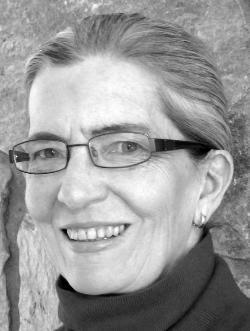
Last November of 2024, there was an enormous loss in our Phenomenological and Psychoanalytic communities, when our friend, mentor, and colleague Donna Orange, PhD, PsyD, was killed tragically in a biking accident. Dr. Orange was a philosopher and relational psychoanalyst who dedicated her life to studying and teaching philosophy, the history of psychoanalysis, and contemporary relational psychoanalysis. Along with her colleagues Atwood and Stolorow, Donna created the intersubjective systems theory of psychoanalysis which emphasizes the ways that personal experience is, first and foremost, relationally founded and formed. As both a Philosopher and a Psychologist, Donna was devoted to highlighting “the ethical turn” of the intersubjective origins of all human subjectivity into focus. In healing practice, both therapist and patient influence and change each other. Donna’s priority for therapeutic work was to call upon therapists to bring their whole being into engagement with the patient. Her writings have been an anchoring beacon for her students and colleagues in the MAP program and at Seattle University ever since she first taught in the Philosophy department many years ago. Her reach and her influence are ongoing and inestimable as she will continue to be our guide and our reminder that there is always a deeper layer of relational ethics to be found in every moment we live the wisdom of love.
Alphonso Lingis, PhD (1933-2025)
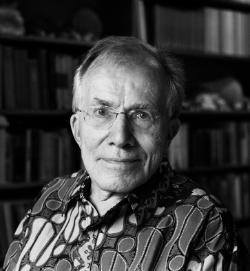
written by —Brian Schroeder, Rochester Institute of Technology
https://www.spep.org/2025/05/alphonso-lingis-in-memoriam/
The news of Alphonso Lingis’ death on May 8, 2025, at the venerable age of 91, was received not only by the philosophical community but also by people from around the world. A specialist in phenomenology, existentialism, structuralism, and poststructuralism, Al distinguished himself by expanding these areas into cross-cultural hermeneutical analyses. An intrepid world traveler and avid photographer, he explored some of the most remote regions of the world conjoining diverse cultural perspectives with astute reflections on ethics, aesthetics, and ontology. After finishing his doctoral studies at Catholic University of Louvain with a dissertation focused on Sartre and Merleau-Ponty, written under the direction of the phenomenologist Alphonse de Waelhens, in 1961 Al took a position at Duquesne University. He soon discovered the work of Levinas, whom he introduced to the English-speaking world through his translations of Existence and Existents, Totality and Infinity, and Otherwise Than Being. In the late 1960s, he accepted a post at the Pennsylvania State University, during which time he translated Merleau-Ponty’s The Visible and the Invisible and the writings of other French philosophers. Al will be remembered not only for his considerable scholarly contributions but also for his warm and giving personality. He was an engaged and stimulating teacher, inspiring his students and peers beyond the merely academic. Al frequently welcomed visitors and interacted freely and enthusiastically with anyone who was interested in thinking and exploration. He was truly a unique person and an original thinker. Our world is only more enriched by the traces of what Alphonso Lingis has left us.
Patrick “Pat” Burke, PhD
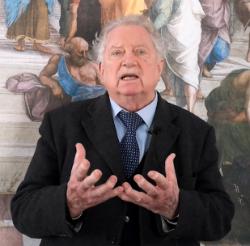
Patrick Burke was a former Seattle University Professor of Philosophy who taught philosophy at SU for almost 30 years. Pat left Seattle University in 1989 to become the Dean of the Gonzaga-in-Florence Program, which he oversaw for almost two decades. During that time, he continued to teach, mentor, and profoundly impact countless students, colleagues, and friends. An internationally respected scholar, Dr. Burke, co-edited The Barbarian Principle and Merleau-Ponty in Contemporary Perspective, contributing meaningfully to global philosophical conversations. A scholar of Continental thought—especially the works of Merleau-Ponty, Levinas and Schelling—he brought intellectual rigor and personal generosity to every classroom. His courses on ethics, existentialism, Christian morality and Renaissance philosophy invited students to engage deeply with ideas, with beauty and with one another. Dr. Burke had a profound impact on generations of students, and he had a deep friendship and collaboration with colleagues throughout the Jesuit community worldwide.
John Sallis, PhD (1938-2025)
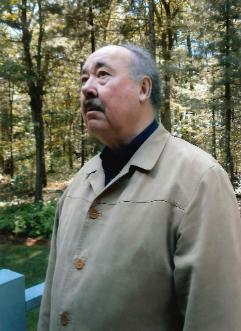
Written by James Risser
Professor Emeritus of Philosophy, Seattle University
https://www.spep.org/2025/04/john-sallis-in-memoriam/
It is with a deep sense of loss that I share the news of the death of John Sallis on February 18, 2025. John was a long-standing member of SPEP and served the society in many ways. He was deeply loved by so many of his students who appreciated the clarity and depth of insight that was the hallmark of his teaching.
For the past 20 years John held the Frederick J. Adelmann Chair at Boston College. He previously held research chairs at Pennsylvania State University, Vanderbilt University, and Loyola University, Chicago. He was professor and former chair at Duquesne University where he established himself as a teacher and scholar of note, becoming one of the most prominent thinkers in contemporary continental philosophy. He lectured both here and abroad with several visiting appointments, and in 2007 he received a doctorate honoris causa from the Universität Freiburg, Germany.
Early on in his career he established the journal Research in Phenomenology, one of the leading journals in contemporary continental philosophy. He was tireless in his devotion to promoting active scholarship, offering substantial support to the Collegium Phaenomenologicum in Italy, the Simon Silverman Phenomenology Center at Duquesne University and the annual Andre Schuwer Lecture held in conjunction with SPEP.
John was the author of over 25 books. His early book, Being and Logos in the Platonic Dialogue, became a touchstone for many of his students, who became scholars in Greek philosophy in their own right. His book, Chorology: On Beginning in Plato’s Timaeus, drew the attention of both Derrida and Gadamer, both of whom enjoyed frequent conversations with John. His work in the history of philosophy saw books on Kant, German Idealism, and Nietzsche, and in contemporary philosophy he had studies on Heidegger and Merleau-Ponty. The focal point of his original work was his three books on the imagination. The third, Ethicality and Imagination is a groundbreaking work on ethical and political community. In his late work John’s attention was drawn to creative studies on art and nature. While at Boston College he curated two significant exhibitions, one on Paul Klee and the other on the contemporary Chinese painter Cao Jun. A beloved scholar and teacher, the legacy of John Sallis will live on.
Changes to IHSR Newsletter Archives
Since the early years of the International Human Science Research Conferences, Seattle University has been hosting the IHSR Newsletter in a variety of formats from physically mailed hard copies to emails with Word documents and PDF attachments. Because many University IT servers screen out potential spam emails with attachments from unknown sources, we have moved to hosting the Newsletter as a web page on the Seattle University web site. We will email a link to the webpage for the newsletter every Fall. In the process of making changes to the Seattle University web site, we have had to make changes to how we store the archives of the Newsletter. If you would like to access any of the archives of the Newsletter prior to 2023 please email Claire LeBeau or Diane Tomhave.
Books
- Hoffman, L. (Ed.) (2025) APA Handbook of humanistic and existential psychology (Vol. 1 and 2). APA Books.
The Introduction and front matter is available at
The APA Handbook of Humanistic and Existential Psychology is due to be released in digital form in December 2025 and print in February 2026. The 2-volume APA Handbook of Humanistic and Existential Psychology provides a comprehensive overview of the rich history, diverse theoretical perspectives, clinical and social applications, and important emerging issues and directions in the field.
The 61 chapters in this Handbook comprise a broad spectrum of coverage from the earliest foundations of humanistic and existential psychology to exciting future developments, including in-depth discussion of: important theorists upon whose work the field was built and developed;
aspects of human nature and existence, including creativity, freedom, social connectedness, authenticity, meaning making, and self-actualization; the relationship of humanistic and existential psychology to other approaches, such as positive psychology, community psychology, and liberation psychology; and multiculturalism, diversity, and social justice in relation to practice, research, and theoretical development within humanistic and existential psychology. This Handbook is both a map of the current landscape of humanistic and existential psychology and a guide to where the field is headed. Researchers, practitioners, and students in psychology and related fields will learn how to incorporate a broad array of theoretical approaches; use quantitative, qualitative, and participatory methodologies; and apply the principles of humanistic and existential psychology to their practice, scholarship, and social advocacy.
Introduction and front matter: APA Handbook of Humanistic and Existential Psychology
The book is also available for pre-order at this webpage. If an APA member, you can receive a significant discount by directly from APA.
- Fagenblatt, M. (2010). A covenant of creatures: Levinas’s philosophy of Judaism. Stanford University Press. [pp 281, $ 30.00 pb].
Fagenblatt is a scholar who has an amazing grasp of Levinas’ philosophy and its relationship to the Judaic tradition, from modern philosophers such as Martin Heidgger and Immanuel Kant to the phenomenological tradition more broadly. He writes remarkably clearly about complex issues and relationships, avoiding dichotomies but embracing both the ambiguity of Levinas’s thought and of human existence. The following quote (p. 47), captures the flavor of his interpretation, and shows that the issues Levinas contended with are, so to speak, matters of life and death:
“..although Levinas’s account of ontological evil is firmly indebted to traditional Jewish mythology, it is, for all that, no less a secular accomplishment. It appeals neither to God nor to the biblical or rabbinic traditions as much as to our secular regard for the difference of innocents, and our secular understanding of our precarious but undeniable power to ameliorate such suffering.” This is not a new book, but it is one that has both academic and personal value for anyone trying to make sense of the agonizing and confusing times that we live in.
- Welkin, Leyla (2025). Sustaining open hearts: Self-care for helpers working with trauma in our complex world. The Pomegranate Connection. [pp. 322, $ 20 pb].
The author has extensive experience working with helpers who have worked with refugees in some of the most troubled and troubling parts of the world. She herself has worked with refugees from Syria and with people from all walks of life who have been traumatized. Her book is rich with descriptions of specific events, experiential exercises, and excerpts from conversations she has had with healers. This is a guidebook for counselors and other helpers with practical suggestions. Yet it is not simplistic and does into shy away from addressing the power of despair and burnout, even as it also points to ways of recovering and moving forward. Leyla Welkin coves a wide range of topics; it is the kind of book that practitioners will turn to when they experience bewilderment and distress as they try to help people who are in pain and who try to find a way to move through situations that seem intractable.
Links/Connections
International Human Science Research Conference Network. The Internet Facebook page set up by Zdzisław Wąsik the convener of the 36 IHSRC in Jelenia Góra https://pl-pl.facebook.com/ihsrcn/
Friends Who Like the International Human Science Research Group. The Internet Facebook page set up by Zdzisław Wąsik the convener of the 36 IHSRC in Jelenia Góra. Available at:
Center for Interpretive and Qualitative Research. Located at Duquesne University, this center has as its purpose the exploration and development of interpretive and qualitative methods. https://www.duq.edu/academics/colleges-and-schools/liberal-arts/departments-and-centers/center-for-interpretive-and-qualitative-research/index.php
Encyclopaideia: Journal of Phenomenology and Education. This is an international, peer-reviewed journal that publishes articles representing the philosophical tradition of phenomenology and its connection with education. Articles about conceptual, theoretical, methodological, empirical and ethical issues in education are welcome. Contributions are accepted both in Italian and English. The journal is published by the University of Bologna. https://publons.com/journal/24878/encyclopaideia-journal-of-phenomenology-and-educat
Environmental and Architectural Phenomenology (EAP). This newsletter has been in existence for twenty years. Edited by David Seamon, the newsletter is published three times a year. EAP is a forum and clearing house for research and design that incorporates a qualitative approach to environmental and architectural experience. The 2025 winter/spring issue is available at the following link: https://www.academia.edu/63030511/ENVIRONMENTAL_and_ARCHITECTURAL_PHENOMENOLOGY_winter_spring_2025
Back issues are now available on the website. https://krex.k-state.edu/dspace/handle/2097/1522
Existential-Humanistic Institute, San Francisco, USA. According to its web site, edited by Kirk Schneider, the goal of the institute “is to support both existentially and humanistically informed psychologies and psychotherapies throughout the world.” Its newsletter is on its web site as well as a bibliography, a listing of workshops and events, and a directory of related links. http://www.ehinstitute.org/
Gendlin Online Library. The Focusing Institute has a powerful new web-based resource containing over 100 of Eugene Gendlin’s works from 1950 to present. Gendlin is distinguished among philosophers and psychologists for his articulation of the link between logic and felt understanding, which he calls the Philosophy of Implicit Entry. Included in the library are published articles, chapters, monographs, and many unpublished articles and conference presentations, all available for free downloading. In some instances, several chapters from his books or a special introduction to them are available. Gendlin’s books are also listed in the library and can be purchased from the Focusing Institute or elsewhere. The library is a great resource for the Human Sciences. http://previous.focusing.org/gendlin/gol_intro.asp
The Humanistic Psychologist. This long-established journal is devoted to reflective inquiry into humanistic psychologies, broadly defined. It publishes papers on qualitative research; humanistic, existential, and constructivist psychotherapies; transpersonal/spiritual psychology and psychotherapy; as well as phenomenological, feminist, and multicultural perspectives. In the spirit of a forward moving field, its editorial board welcomes submissions representing both modern conceptions and postmodern critiques of humanistic psychologies. http://www.apa.org/pubs/journals/hum/index.aspx
Interdisciplinary Coalition of North American Phenomenologists (ICNAP). See notice under calls for papers, above. http://icnap.org/
International Network of Personal Meaning. This network is related to both of the above. It is a multidisciplinary, learned society, dedicated to the advancement of knowledge on the vital role of meaning in mental and physical health, spiritual development and other areas of life. It was founded by Dr. Paul Wong. http://www.meaning.ca/
Journal of Phenomenological Psychology. This journal publishes articles that advance the discipline of psychology from the perspective of the Continental phenomenology movement. Within that tradition, phenomenology is understood in the broadest possible sense including its transcendental, existential, hermeneutic, and narrative strands and is not meant to convey the thought of any one individual. https://brill.com/view/journals/jpp/jpp-overview.xml
European Journal of Qualitative Research in Psychotherapy. The journal offers a space for any qualitative research which aims to explore psychotherapeutic practice, whether in Europe or further afield. We welcome contributions from different methodological and theoretical standpoints, as well as relevant literature reviews, critical explorations of methodology and philosophical research. Submissions of qualitative empirical research examples are particularly encouraged.
Middle Voices. Middle Voices is a peer-reviewed journal, which aims to carry forward the critical spirit of the human-science tradition of psychology in contemporary form. We seek original articles, including qualitative and quantitative research, critical and theoretical work, and symposium-based papers. Exceptional creative or experiential work may also be considered if it significantly engages with themes from human-science psychology. We invite scholarships from the social sciences and humanities, as well as post-graduate, faculty, and independent research. https://dsc.duq.edu/middle_voices/
Michigan School of Professional Psychology. Clark Moustakas, Michigan, USA, founding member of the Humanistic Psychology movement and originator of Heuristic Research, established the Michigan School of Professional Psychology, formerly the Center for Humanistic Studies, in 1981. MiSPP offers Masters and PsyD degrees in clinical psychology, emphasizing existential-humanistic principles and clinical application.
Newsletter of Phenomenology. This free weekly newsletter provides information about what is going on in the world of phenomenology, including information about conferences and workshops, lectures, new books. You can subscribe and submit content via e-mail. https://newsletter-phenomenology.ophen.org/
Phenomenology Online. This site provides public access to articles, monographs, and other materials discussing and exemplifying phenomenological research. It is edited by Max van Manen. The site has access to numerous full-text articles, including many from the journal Phenomenology + Pedagogy http://www.phenomenologyonline.com/ [or] https://www.facebook.com/Newsletter-of-Phenomenology-128221887227929/
Phenomenology and Practice. Phenomenology & Practice is a human science journal dedicated to the study of the lived experience of a broad range of human practices. These include (but are not limited to) the professional practices of pedagogy, design, counseling, psychology, social work, and health science. https://journals.library.ualberta.ca/pandpr/index.php/pandpr
Psychotherapy Action Network. This organization, founded in 2017, is run entirely by volunteers. It is free to join and they truly welcome new members. . PsiAn has three main purposes: 1) support psychotherapists who do in depth work, 2) inform the public about the nature of psychotherapy, and 3) advocate, at level of public policy and legislation, for psychotherapy. https://psian.org/
Saybrook University Located in San Francisco, this program offers MA and PhD degrees and has a long-standing tradition of emphasis on phenomenological and humanistic psychology. https://www.saybrook.edu/areas-of-study/
Simon Silverman Phenomenology Center at Duquesne University. This website has almost all of the abstracts of the psychology dissertations done at Duquesne University, University of Dallas, and a number from Georgia State University and the Saybrook Institute. The dissertations cover a vast spectrum of topics including hopelessness, forgiveness, depression, infidelity, magic and science, psychotherapy, eating disorders, and many more. https://www.duq.edu/research/centers-and-institutes/simon-silverman-phenomenology-center/index.php
Society for Phenomenology and the Human Sciences. SPHS encourages the application of phenomenological methodology to specific investigations within the human sciences. You are invited to join SPHS in its effort to achieve a deeper understanding of and engagement with the Life-World. SPHS holds its meetings in conjunction with SPEP (Society for Phenomenology and Existential Philosophy). http://www.sphs.info/
Society for the Phenomenology of Religious Experience. Available at: http://sophere.org/
Society for Qualitative Inquiry in Psychology (SQIP) – The mission of the journal Qualitative Psychology® is to provide a forum for innovative methodological, theoretical, and empirical work that advances qualitative inquiry in psychology. The journal publishes articles that underscore the distinctive contributions that qualitative research can make to the advancement of psychological knowledge. Studies published in this Journal often focus on substantive topics, while also highlighting issues of epistemology, the philosophy of science, methodological criteria, or other matters bearing upon the formulation, execution, and interpretation of qualitative research. Qualitative Psychology publishes studies that represent a wide variety of methodological approaches including narrative, discourse analysis, life history, phenomenology, ethnography, action research, and case study. The journal is further concerned with discussions of teaching qualitative research and training of qualitative researchers. https://www.sqip.org/journal
Similar News & Stories
-
South Seattle Emerald: Computer Science Chair Burkhard Englert on Data Centers
Campus News, In the NewsComputer Science Chair Burkhard Englert is interviewed about the impact of data centers on local power and water supplies. -
/0x11:2326x1480/prod01/channel_34/media/seattle-university/news-amp-stories/magazine/spring-summer-2026/JonBaker_newsroomstory.jpg)
A Pioneering Powerhouse
Seattle University MagazineAs Seattle University celebrates 50 years of Diagnostic Ultrasound, the story of Joan Baker reveals how one unexpected career turn helped create what is now a vital tool in modern health care. -
/105x0:1815x1080/prod01/channel_34/media/seattle-university/college-of-nursing/programs/images/Nurnissa-Mohd-Rozi-Banner.jpg)
Diagnostic Ultrasound Junior Earns Scholarship from the American Society of Echocardiography
Campus NewsNurnissa Mohd Rozi, ’27, recognized for academic excellence, leadership and her commitment to the field of echocardiography.
Contact Listing
/0x173:1000x1327/prod01/channel_34/media/seattle-university/directory/faculty-amp-staff-directory/images/artsci/Claire-LeBeau.jpg)
/0x28:576x693/prod01/channel_34/media/seattle-university/directory/faculty-amp-staff-directory/images/placeholders/ProfileDefaultPics-Interlock.png)