/67x0:1064x636/prod01/channel_34/media/seattle-university/news--stories/images/Roundglass-India-Center-graphic-1130X636.png)
Faculty delegation to India, created by the Roundglass India Center, connects scholarship and cultural exchange.
Last December, a Seattle University faculty and staff delegation traveled to Bhubaneswar, India, for an academic visit coordinated by Seattle University’s Roundglass India Center.
Representing all seven colleges, the delegation visited the Kalinga Institute of Industrial Technology (KIIT) and the Kalinga Institute of Social Sciences (KISS), taking part in teaching sessions, campus visits and leadership discussions that explored how universities across different regions approach education and institutional growth.
The visit combined KIIT’s India Trek and Global Faculty Programme for the first time, bringing together classroom exchange with place-based learning. Faculty joined seminars and roundtable conversations with educators and institutional leaders, focusing on topics such as wellness, institution building and the responsibilities of higher education in serving Indigenous student populations. These discussions provided participants with direct insight into how KIIT and KISS structure programs that integrate education with cultural identity.
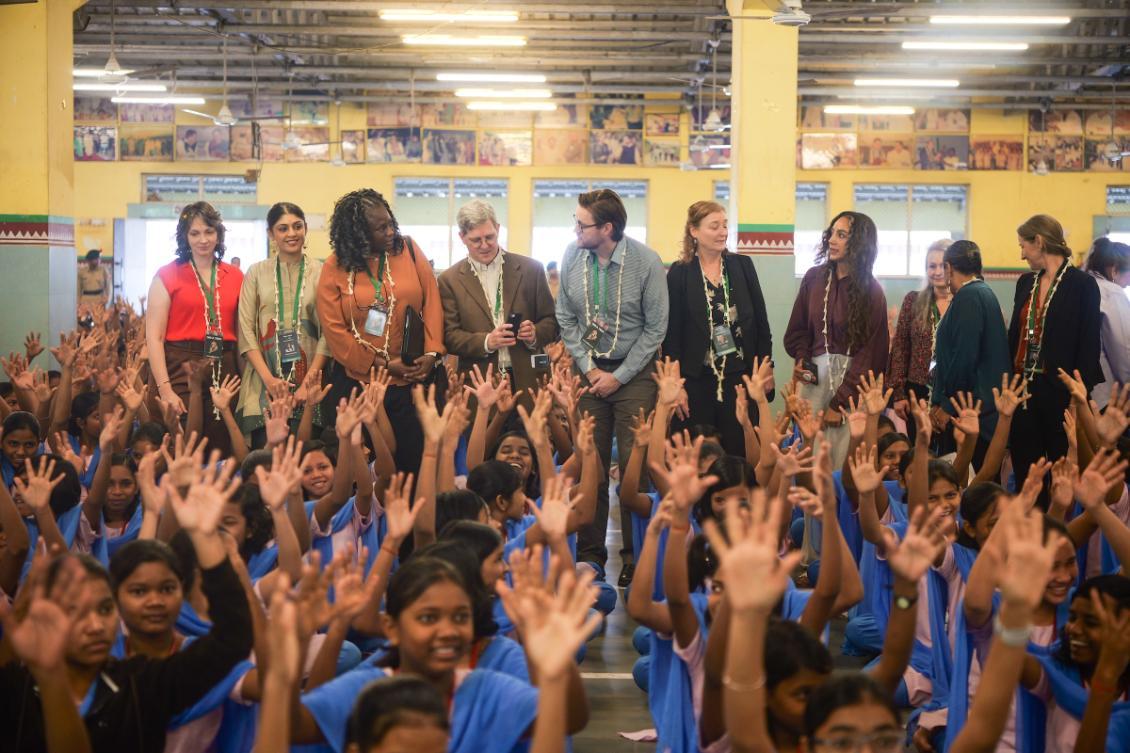 The delegation is welcomed by 10,000 students from the KISS school during a meditation session.
For Professor Colette M. Taylor, the experience offered a closer look at how large educational systems operate while remaining grounded in their guiding values.
“It was a profoundly meaningful experience, personally and professionally,” says Taylor, who is Special Assistant to the Vice President of Mission Integration and founding director of the Center for Social Transformation and Leadership. “The visit offered a clear window into how KIIT and KISS weave access, dignity and community well-being into every layer of their work.”
One moment that stood out to Taylor was visiting the KISS campus, which supports tens of thousands of Indigenous students through integrated academic and cultural programming. Observing students studying and their participation provided context for the leadership discussions she attended, where KIIT and KISS leaders spoke about scaling institutional impact while staying accountable to the communities they serve.
Taylor notes that hearing these perspectives alongside colleagues from multiple disciplines added depth to the experience and informed how she approaches immersive learning and mentoring within her own work.
The interdisciplinary makeup of the delegation shaped many of the conversations throughout the visit. Faculty from education, business, engineering, public health and the humanities brought different viewpoints into discussions, asking varied questions about student support, institutional design and academic exchange. That range of perspectives allowed participants to examine the KIIT and KISS model from several angles rather than through a single academic lens.
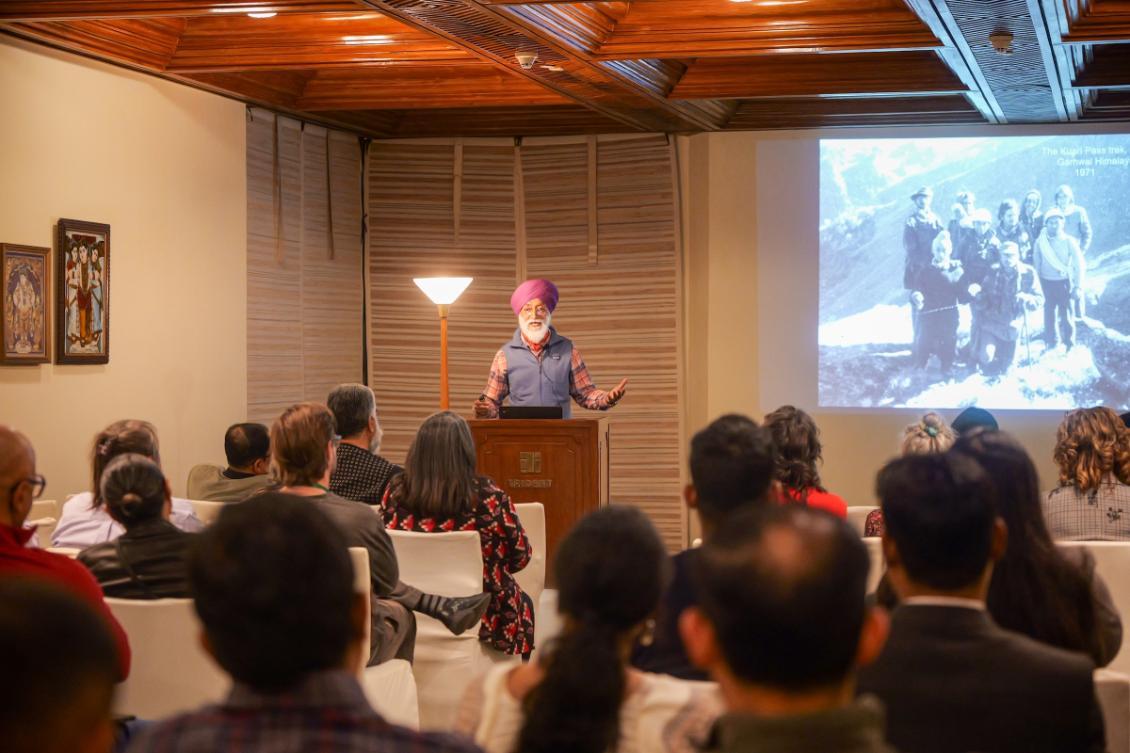
Members of the delegation listen on as hiker and mountaineer Ranveer Singh gives a talk chronicling his decades of travels.
The Roundglass India Center, founded in 2023, organized the delegation as part of its broader mission to educate communities, connect India and the United States through cross cultural exchange and give back through initiatives rooted in justice and service. The center focuses on the study of contemporary India and Indian Americans through faculty research and teaching, public dialogues and events and two award-winning podcasts, The Hyphen and Desi Roots and Routes.
According to Associate Director of the Roundglass India Center Shannon Young, the opportunity for the delegation began after the founder of KIIT and KISS visited Seattle University earlier in the year and invited faculty to India following meetings with university leadership.
“I saw this as more than an exchange,” says Young. “It was a chance to build a structured, university wide global engagement initiative.”
Young explains that bringing together faculty from all seven colleges was an intentional decision that reflected the university’s interdisciplinary approach while strengthening institutional relationships. Integrating two existing programs into one visit created space for sustained dialogue between faculty and international partners and marked a step toward long-term academic collaboration.
As Seattle University continues to explore international partnerships, the delegation to India highlights how faculty-centered initiatives can support academic exchange and cross-cultural understanding. For participants, the experience offered new perspectives that continue to shape conversations in classrooms and scholarly work, while strengthening ties between Seattle University and institutions in India.
Similar News & Stories
-
/0x1245:2172x2617/prod01/channel_34/media/seattle-university/college-of-arts-and-sciences/images/IMG_0019.jpeg)
Saheed Adejumobi, PhD, Associate Professor of History and African and African American Studies, Appointed to Pigott McCone Chair
SU NewsTwo-year project will focus on intersections in the work of W.E.B. Du Bois and Dr. Quintard Taylor -
/26x0:2352x1469/prod01/channel_34/media/seattle-university/news--stories/images/CHESS-story-photo-rooftop.JPG)
A New Chapter Begins
SU NewsCollege of Humanities, Education and Social Sciences looks to the future. -
/0x348:800x853/prod01/channel_34/media/seattle-university/news--stories/images/Blessing-Animal-priest-with-brown-dog-800X1200.jpeg)
Bless the Animals
SU NewsEvent celebrates the Feast of St. Francis of Assisi and anniversary of the Chapel of St. Ignatius.