Raman Family Faculty Grants
Supporting full-time Seattle University faculty pursuing India-related research or course development
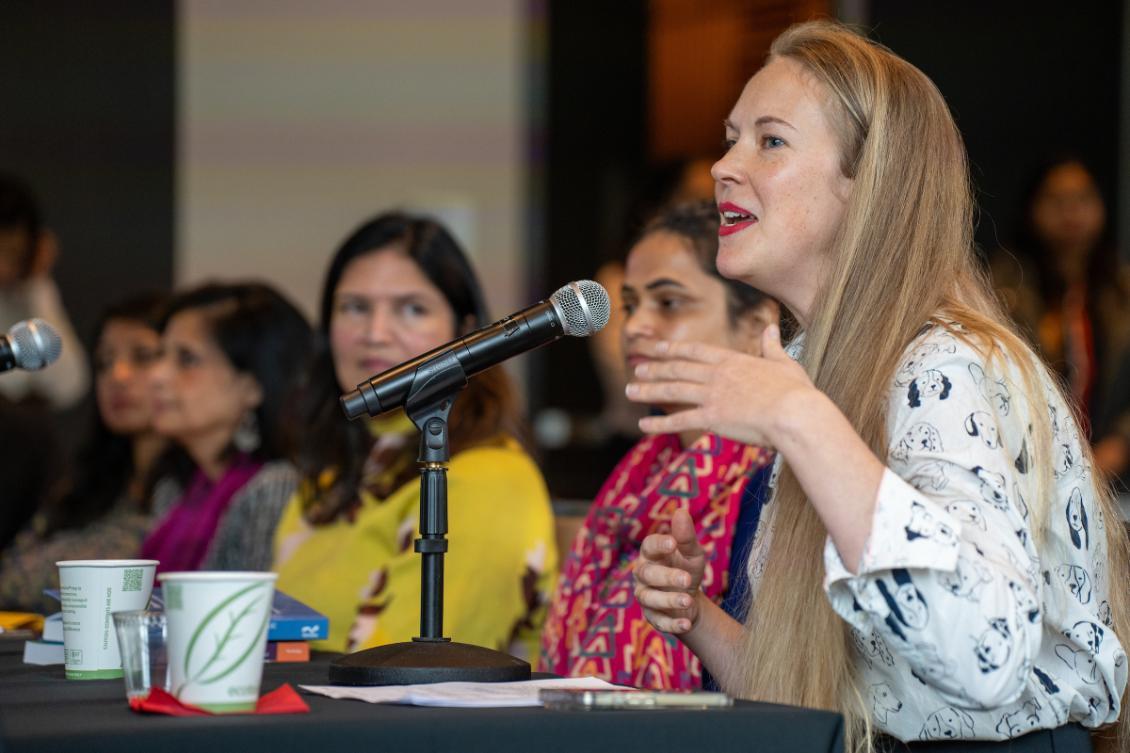
The Raman Family Faculty Grants, named in honor of a generous gift from Suri and Mala Raman, advance faculty scholarship on India, South Asia, and Indian and South Asian Americans in all academic disciplines. Awards are offered in two categories: Research Projects advancing inquiry connected to India or South Asia, and Course Development to build or significantly revise India-focused curricula. Full-time faculty in all disciplines are encouraged to apply.
The funds are designed to support seasoned scholars of South Asian Studies while encouraging new faculty to expand their research or coursework into topics relevant to India. Through this program, we educate about India and its diaspora and invest in faculty scholarship and student learning opportunities.
Named in honor of a generous gift from Suri and Mala Raman.
-
Research Grants
Purpose: Support research expenses, including travel, conference fees, publication costs, completion of creative projects, student assistance, or acquisition of research materials.
Selection Criteria: Scholarly merit and originality; clear contribution to the study of India or the Indian diaspora; feasibility within the funding period. -
Course Development Grants
Purpose: Encourage faculty to integrate India or Indian diaspora related content into the curriculum by developing a new course or significantly revising an existing one. In light of SU's changing academic calendar, proposals must be for a semester-length course.
Selection Criteria: Centrality of India/Indian diaspora content to the course; clarity of proposal for non-specialists; relevance and significance to the applicant's discipline; feasibility of course delivery within the stated timeframe.
How to Apply
Full-time Seattle University faculty can find full program details, funding eligibility, and application details at Redhawk Hub.
2027 Application Cycle Open
Deadline to apply: January 4, 2027.
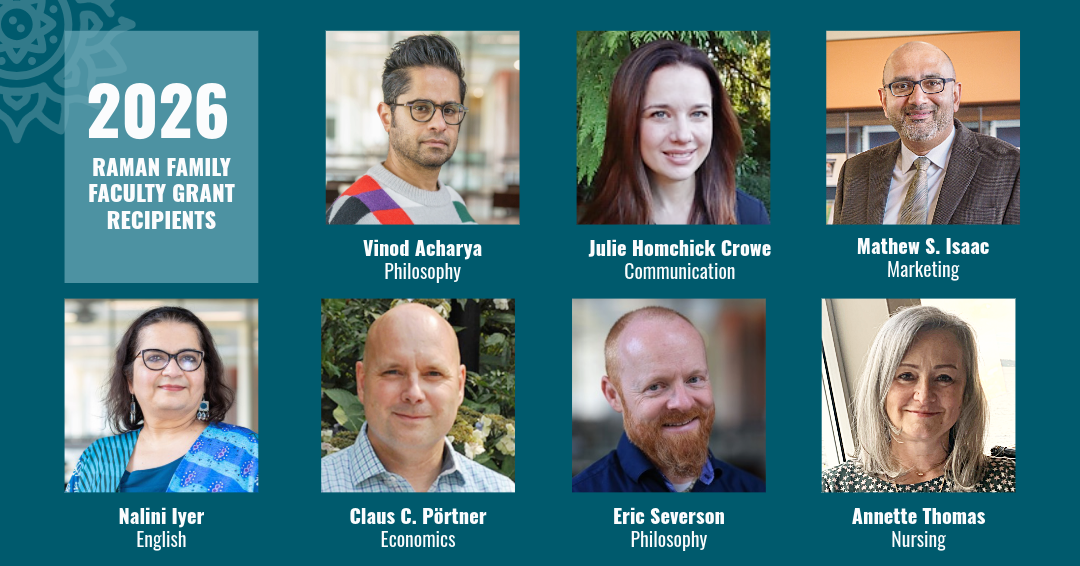
- Vinod Acharya, Philosophy — UCOR Course: Politics, Identity and Belonging in India and South Asian Diaspora
- Julie Homchick Crowe, Communication — Heritage and Health: Yoga, National Identity, and Hindu Nationalism in Modern India
- Mathew Isaac, Marketing — Collaborative Research Incubator for Consumer Behavior Scholars from India and the United States
- Nalini Iyer, English — Mother–Daughter Collaboration in the Fiction of Anita and Kiran Desai
- Claus Pörtner, Economics — Institutional Shocks and Biological Vulnerability: Disentangling India's Shifting Sex Ratios
- Eric Severson, Philosophy — India-Based Research for A Monster's Guide to World Philosophy
- Annette Thomas, Nursing — UCOR Course: Introduction to Global Health: India
- Tapoja Chaudhuri, Anthropology — Extending qualitative research on climate change and philanthropy beyond the PNW to interview diasporic activists and non-profit volunteers in climate-impacted communities in India
- Rebecca Cobb, Couples and Family Therapy — Co-editing the third edition of a foundational marriage and family therapy textbook, exploring culturally attuned applications of its approaches
- Nalini Iyer, English — International travel to moderate two panels on intersectionality in South Asian diasporic writing at the European Conference on South Asian Studies in Heidelberg, Germany
- Sonora Jha, Communications — Research to revise and support the 2026 U.S. edition of her novel Foreign
- Meenakshi Rishi, Economics — Domestic travel within India to collaborate on new research on women's participation in the Indian labor force
- Annette Thomas, Nursing — Developing a global health immersion program in India with a team of nursing faculty
- Tapoja Chaudhuri, Anthropology — Climate Change and Philanthropy: A focus on the Indian diaspora in the PNW
- Rashmi Chordiya, Public Affairs and Nonprofit Leadership — Liberatory Public Service in Action: Case Studies from the United States and India
- Rebecca Cobb, Couples and Family Therapy — Moksha Patam: Adaptation of an Ancient Indian Game for Culturally Relevant Teletherapy Intervention
- Mathew Isaac, Marketing — Cherished Numbers: Do Preferred or Auspicious Numerical Values Influence Marketplace Judgments in the U.S. and India?
- Sonora Jha, Communication — Intersections of Caste, Disability, and the Female Body in India
- Meenakshi Rishi, Economics — Keynote Lecture at Global Finance Conclave at Jindal Global University
Questions
Questions? Contact roundglass@seattleu.edu.
Contact Us
Roundglass India Center
Follow us on social media: @roundglassindiacenter
LinkedIn | Instagram | Facebook | YouTube