/0x3:2326x1487/prod01/channel_34/media/seattle-university/news--stories/magazine/spring-summer-2026/JonBaker_newsroomstory.jpg)
Joan Baker with College of Nursing and Health Sciences Dean Butch de Castro and Diagnostic Ultrasound program director Mirette Aziz.
As Seattle University celebrates 50 years of Diagnostic Ultrasound, the story of Joan Baker reveals how one unexpected career turn helped create what is now a vital tool in modern health care.
Joan Baker did not set out to become a pioneer. In fact, her path into medicine—and into a field of which she would become synonymous with—started with a detour.
“I wanted to go to medical school,” she recalls. “But I failed my language course—French—so I shifted to my plan B, which was radiography.”
That pivot, which may have seemed inconsequential at the time, would prove to be momentous, even life changing. And Seattle University benefited from Baker’s trailblazing ways when her non-direct professional path ultimately led her to the university and bringing with her the knowledge and inventiveness to build from the ground up what is today known as an in-demand Diagnostic Ultrasound program.
If not for Baker, Diagnostic Ultrasound, housed in the College of Nursing and Health Sciences, would not this year be celebrating its 50th anniversary.
Baker’s journey that would ultimately lead her to SU began in her home country of England, where she would first train in radiography at a small hospital where she was placed—entering the clinical world you didn’t choose where to do your clinical training. Here she got firsthand experience working in the fast-paced medical field.
After finishing her clinicals she moved to the big city—London—and stepped into a dramatically different world at St. Mary’s Hospital. “I went from 132 beds to about a thousand beds.”
Her first night on call coincided with one of London’s infamous “pea soup” fogs—thick, choking smog that paralyzed the city’s transportation. On this night, a train experienced a brake failure and was unable to stop, overrunning the station platform. The accident resulted in a large number of injuries and a sudden influx of patients requiring urgent medical attention.
“This was my first night working at the hospital,” she says. “It was unbelievable. They told me to go and call my colleagues and get them to come in. I dialed 23 numbers and got no replies. That’s really how my career started.”
But it would be at the National Hospital for Nervous Diseases, a neurological hospital in Queen Square, London, that Baker would step into the emerging fields of nuclear medicine and ultrasound—work that would come to define her career and cement her legacy.
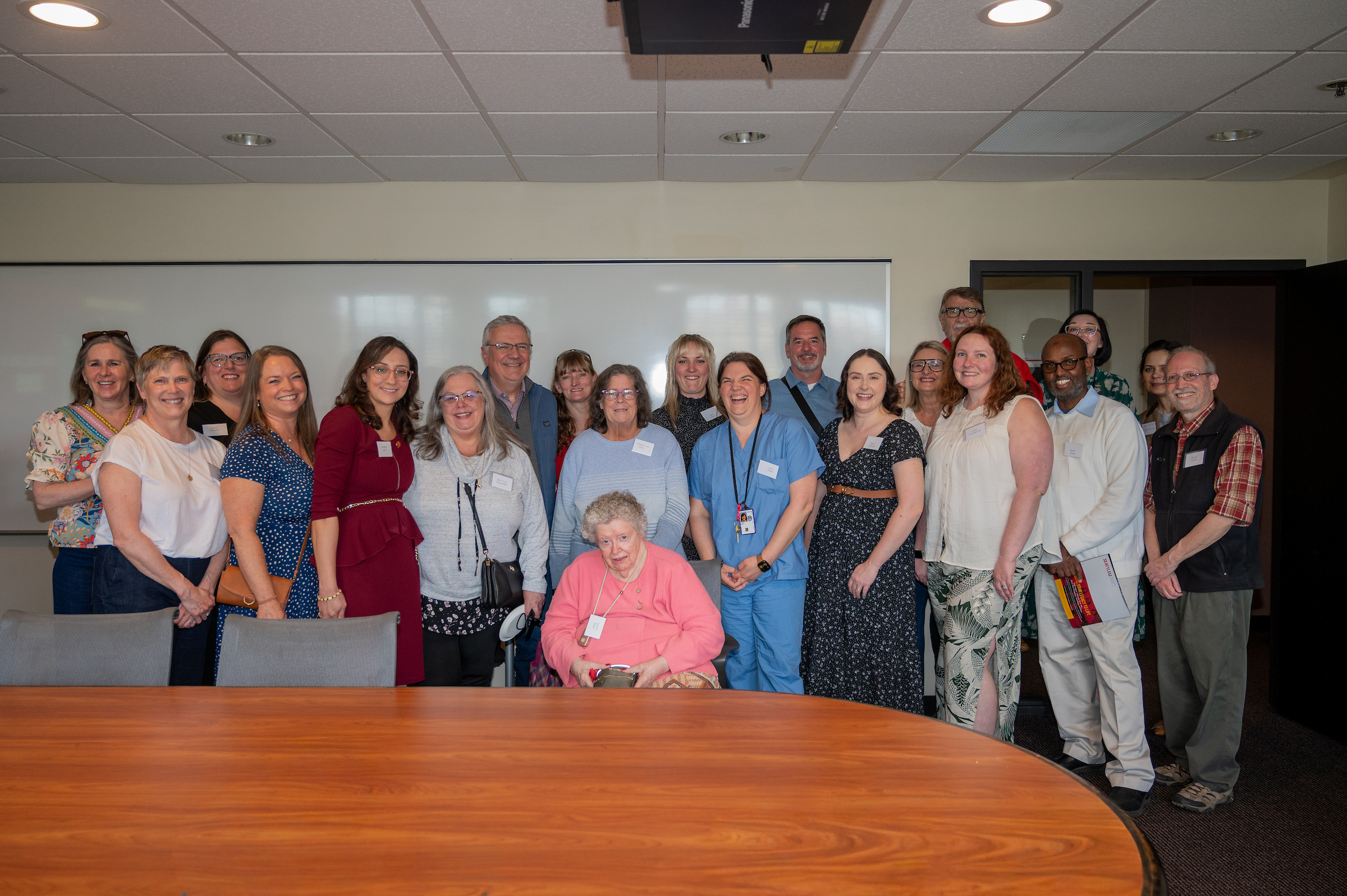
Joan Baker reunites with some alumni and faculty of the Diagnostic Ultrasound program during an event to mark the program's 50th anniversary.
The year was 1960. Baker describes herself at the time as “the last hired and least qualified,” yet she was assigned to operate the department of radiology’s new nuclear medicine and ultrasound equipment.
At that time, nuclear medicine brain scans were agonizingly slow. The technology was still new to medicine and each scan could take up to two hours to complete.
“But that’s when my career started in nuclear medicine and ultrasound, in this new field," she says.
Five years later, Baker’s growing reputation in the emerging field of diagnostic ultrasound would attract the attention of Stanford Medical Center in Palo Alto, California. Living and working in England at the time, she was invited to bring her expertise across the Atlantic to help Stanford’s neuroradiology department to expand into diagnostic ultrasound.
The opportunity marked a major turning point in her career. At a time when ultrasound was still in its infancy, Stanford recognized the value of Baker’s experience and together they established one of the early diagnostic ultrasound departments in the United States.
“I thought of it as an adventure but didn’t realize how prestigious Stanford Medical Center was,” she says. “I had been doing ultrasound for five years but there were only a handful of us doing this ultrasound work at that time.”
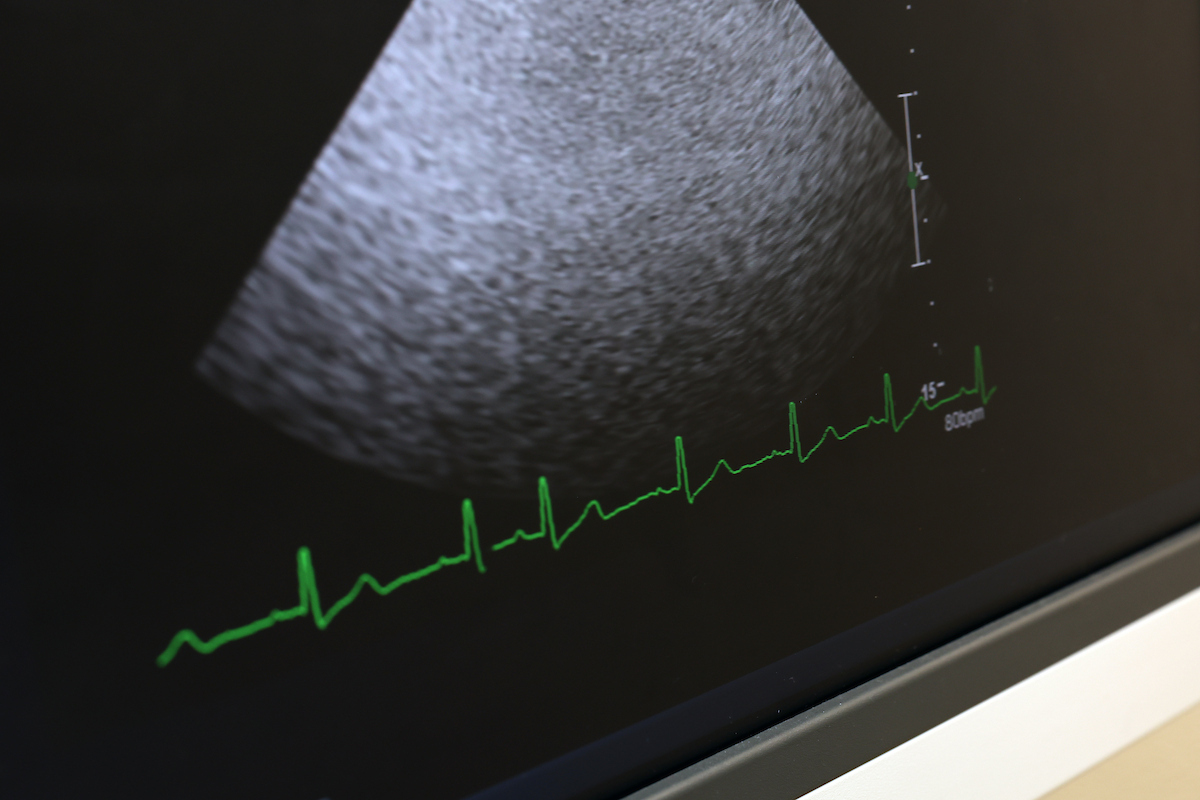
Finding Community in An Emerging Field
Ultrasound in the 1960s was not just new, it was isolating. Practitioners were scattered, often working alone, with little institutional support.
At a 1969 meeting of the American Institute of Ultrasound in Medicine, Baker found her ultrasound peers. “There were five other people like me,” she says. “That was all.”
This small group gathered informally, sharing ideas and frustrations. “We got together at a bar and felt it was pretty lonely in the field of ultrasound, so we decided it would be nice if we communicated with one another more frequently,” Baker says.
Out of this meeting a profession was born. “We formed a society of people like us,” says Baker. “We weren’t physicians, but we were ultrasound technical specialists performing diagnostic studies on patients."
The growth was explosive—today, those working in the field number in the thousands—in what Baker calls “the Sonic Boom.”
The move from California to Seattle came through both opportunity and companionship. At a conference she met a renowned bio-engineer named Donald Baker, who was working at the University of Washington. It was an introduction sparked by the coincidence of their shared last name and would be the person she would one day marry.
In 1970, now calling Seattle home, Baker joined the department of radiology as the chief technologist of nuclear medicine and ultrasound at Providence Hospital.
Her experience would ultimately bring her to Seattle University. Baker was contacted by the then dean of the College of Science and Engineering and asked me to meet with him.
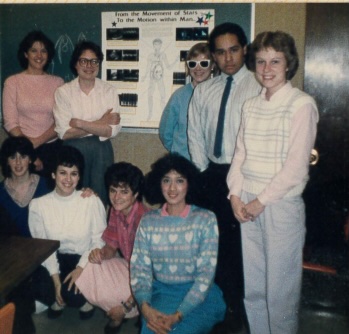
The early years of Diagnostic Ultrasound...
At that meeting he said he wanted to add ultrasound to the offerings of Seattle University and offered Baker a faculty position, which she accepted, creating and leading the department of Allied Health. At the same time she also was teaching classes in ultrasound and nuclear medicine with 18 part-time faculty.
“It was wonderful to be part of something that starts out in such a small, humble way and where you have a lot of support from colleagues and the university," Baker recalls.
And thus the beginnings of what would become Seattle University's Diagnostic Ultrasound program of today.
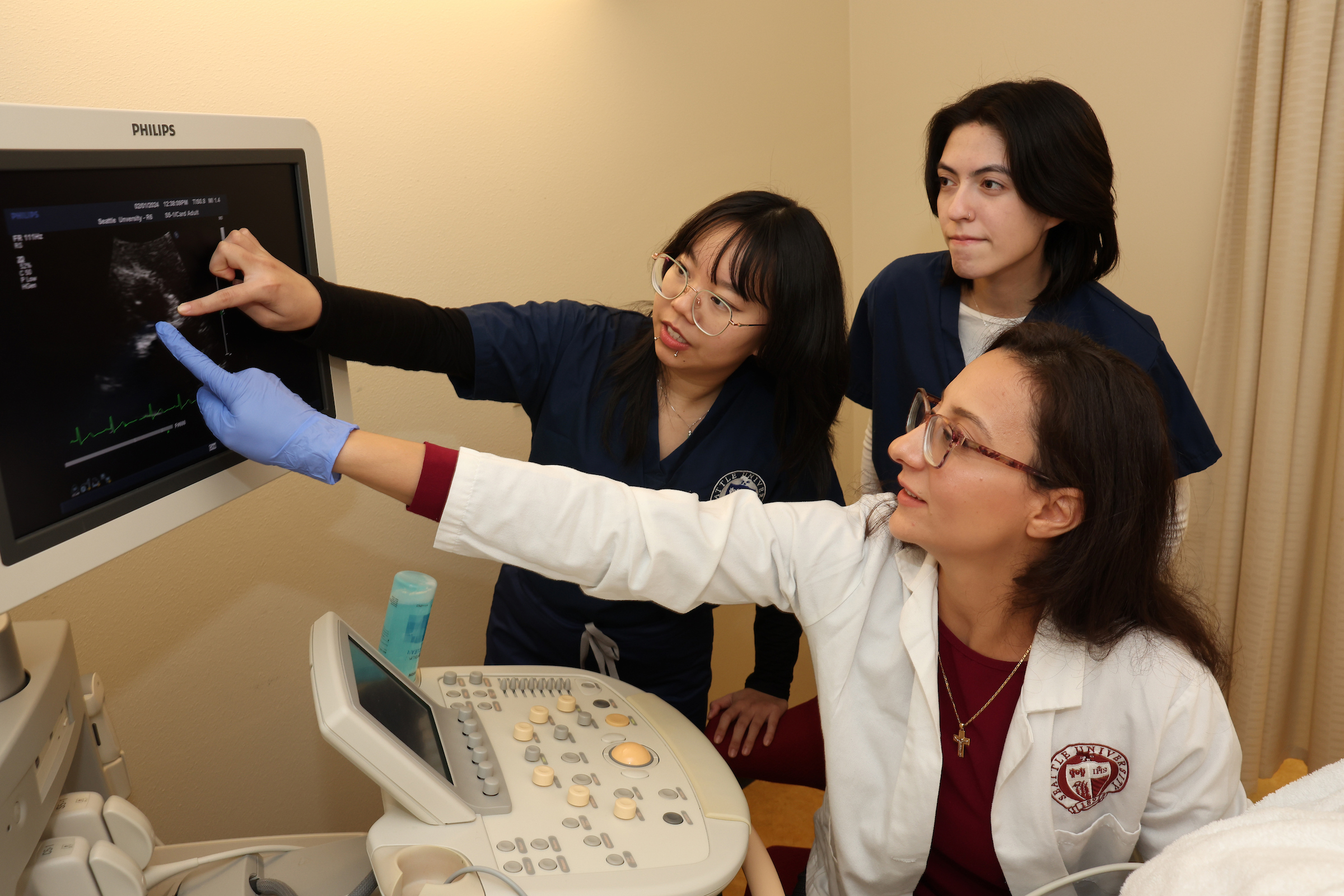
Training a New Generation
For the past five decades Seattle University’s Diagnostic Ultrasound program has been preparing the next generation of sonographers to care for patients in an ever-changing health care landscape.
The program transitioned from the engineering school to the College of Nursing in 2018, aligning it thematically closer with nursing programs and giving it greater visibility.
The success of the program, now under Health Sciences as part of the expanded College of Nursing and Health Sciences (CNHS), is a full circle moment for its director, Mirette Aziz, who herself graduated from the program in 2010.
“Being part of the CNHS has been incredibly positive,” says Aziz, who returned to SU as a faculty member in 2019. “It recognizes ultrasound as a vital part of health sciences and has opened doors to deeper collaboration with other health programs, broadening learning opportunities.”
Unlike many institutions that offer only certificate or associate-level training, SU provides a four-year Bachelor of Science in Diagnostic Ultrasound. The program also offers a two-year, post-baccalaureate pathway for students who already hold an undergraduate degree. Students choose one of three specialty tracks—general, cardiac or vascular—and benefit from hands-on experience through extensive year-long clinical rotations.
The program has been at the forefront of research and innovation. In 2024, Seattle University was selected as one of only three universities nationwide to pilot a study on virtual reality (VR) ultrasound training, in partnership with Inteleos and Vantari VR, for what could become a new standard in ensuring confidence and advancement in patient care.
And last fall SU was named an official Inteleos/Vantari Beta Site—one of only a handful worldwide—giving students and faculty early access to new VR modules and the opportunity to directly shape future training content aligned with the American Registry for Diagnostic Medical Sonography. The program put VR technology—via two headsets—into practice.
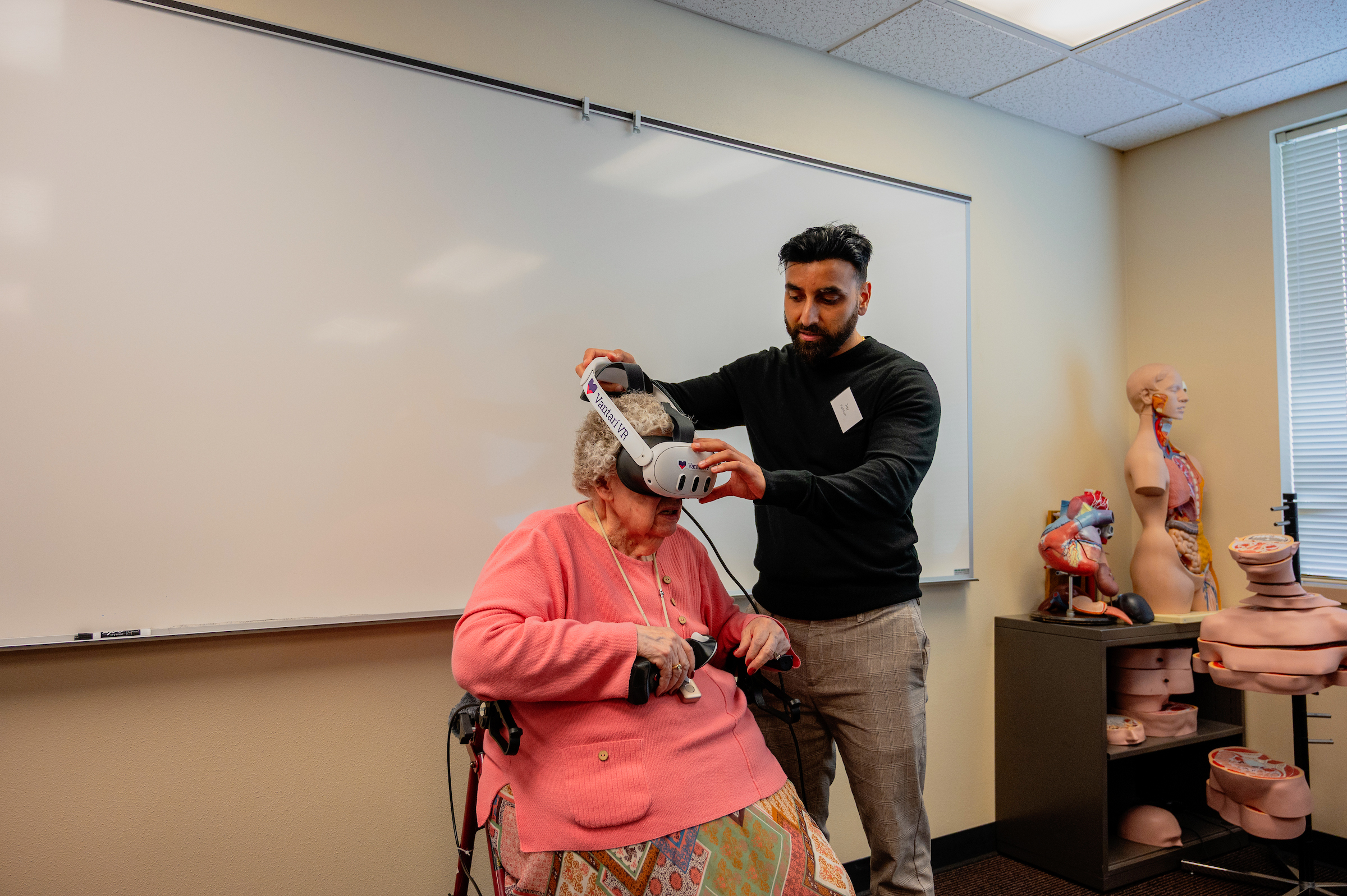
Joan Baker tries on the latest in Diagnostic Ultrasound education—a virtual reality (VR) headset.
For Aziz, the program celebrating this half-century milestone is significant on many levels.
“The milestone represents years of preparing students who are now out in the field caring for patients and contributing meaningfully to health care. It reflects decades of excellence in education, strong student outcomes and, most importantly, the consistency and quality of the program over time,” says Aziz.
“It’s also a moment to recognize the faculty, staff, clinical partners and alumni who have built and sustained it and a reminder of our continued commitment to advancing ultrasound education and patient-centered care into the future.”
Seattle University’s program stands out for the way it brings together strong academics with hands-on learning in a supportive, mission-driven environment.
Students spend their junior year balancing advanced didactic coursework with intensive, track-specific scan labs on campus. This directly prepares them for their full-time yearlong clinical rotations at an affiliated health care site, providing immersive, real-world sonography experience.
Says Aziz, “By the time they graduate, they’re not only highly skilled, but also confident, compassionate and ready to make a meaningful impact in patient care.”
One of the graduates of the program, Tim Thiigpen ’83, who studied under Baker’s leadership, recalls just how transformative it was to be part of the program that at the time was only one of a few worldwide and to be able to work with a visionary like Baker.
As a 21-year-old transfer student, Thigpen says he was “driven to help create a new allied health field and Joan provided the insights and encouragement ... and the confidence that I would need to succeed.”
Thigpen says Baker was a realist, someone who “pulled no punches” but also was a selfless advocate for students, continuing to offer career guidance even after graduation.
“In short, Joan cared. She was not an ivy tower idealist and encouraged me to see the world and the motivations of those in it for what they were,” he says. “She was unflappable in her efforts to create something from nothing and instilled in me a tremendous sense of optimism and diligence that I exhibit to this day.”
For Baker, she takes her usual humble approach to being a true trailblazer.
“It means a lot to somebody like me that the program has been sustained and exploded” over the past 50 years, she says. “That’s that Sonic Boom that happens in spite of you.”
Did You Know…
Joan Baker helped create the American Registry of Diagnostic Medical Sonographers, establishing certification standards that would shape the profession nationwide.
“The first year, in 1975, we had 200,” she says. “And there are 100,000 members now.”
Similar News & Stories
-
/0x74:2386x1581/prod01/channel_34/media/seattle-university/news--stories/images/Student-Spotlight-Dunston1(1)-copy.jpeg)
Peak Performance
SU NewsBrenna Dunston’s research on effects of shoelace tension on athletic outcomes helped earn her a Provost’s Award. -
/46x0:1154x700/prod01/channel_34/media/seattle-university/news--stories/images/Alumni-Awards-nom-graphic.jpg)
Alumni Award Nominations Open
SU NewsCategories include Alumna/us of the Year, Jesuit Mission Award and Outstanding Recent Alumna/us. -
/0x69:1180x814/prod01/channel_34/media/seattle-university/news--stories/images/Student-Profile-Isono-portrait.jpeg)
Adding Up to Success
SU NewsAlbers Scholar Award recipient charts his future path via unique 3+3 Pathway program.
Contact Listing
/0x48:1000x1202/prod01/channel_34/media/seattle-university/directory/faculty--staff-directory/images/nursing/Mirette-Aziz.jpg)