/100x0:1031x594/prod01/channel_34/media/seattle-university/news--stories/images/Intern-Clark-pic-with-boss-1130X594.jpeg)
Clark Hayashi (left) upon completion of his internship at Bank of Hawaii.
Seattle University students and recent graduates are gaining real-world experience, expanding their networks and discovering future career paths through internships.
Last summer Clark Hayashi, ’26, did an internship back home in Honolulu, Hawaii. Growing up in Honolulu, there were a few things synonymous with the capital city—the weather, golden sandy beaches, authentic cuisine and the Bank of Hawaii. Yes, a bank that is as ubiquitous as the postcard-worthy sunsets.
“From the credit card with Hawaiian Airlines to the branches and sponsorships, everyone knows BOH,” says Hayashi, who notes that there are no big mainland banks like Chase or Bank of America so BOH really acts as a local bank for the people of Hawaii.
“So when the opportunity came up to intern there, I couldn't pass it up. … I felt a real connection with the people and the roles the bank offered.”
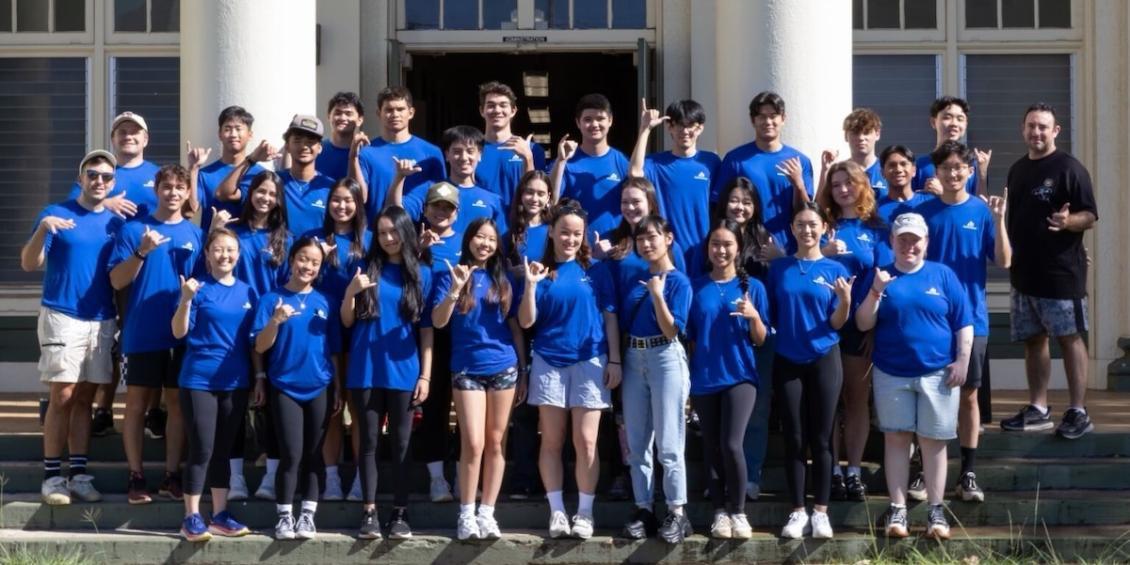
Clark Hayashi among the Bank of Hawaii interns last summer.
At the Bank of Hawaii, the double major in business analytics and marketing (with a minor in Japanese) was part of a team working as AI consultants. They were tasked with interviewing bank employees, organizing 50+ potential use cases for AI, finding solutions to challenges and then presenting the results to bank leadership to implement.
Seattle University is celebrating interns like Hayashi on National Intern Day (the last Thursday in July), which began in 2017 as a way for the thousands of employers nationwide to honor and express the value that interns bring to their companies and organizations.
Hayashi learned about the internship opportunity with BOH when he attended the bank’s career networking event as the plus-one of an SU classmate. There he learned about the role and was able to connect in-person with the hiring manager, another example of the potency of networking.
Reflecting on the experience, Hayashi says he learned that even when working in the artificial intelligence space, human relationships are vitally important whether it’s working on solutions to make one’s life—or work—more successful or in the one-on-one conversations that bolster personal and professional growth.
“AI adoption is less about the technology and more about the people. AI may give you an answer, but it still comes down to the people using the tool,” he says. “Finding real problems, judgment of the output AI gives back, communicating clearly and bringing everyone along can really not be replaced.”
He also points to coffee chats with executives and colleagues where he could glean valuable life lessons and advice, like the notion “that hardly anyone’s career is a straight direct line,” he says.
“Many of them never studied what they ended up doing, did not know where they were going or what they wanted to do. As someone who came into college with a minimum idea of what I wanted to do, hearing that was really comforting.”
And he advocates for current students to do an internship, especially at a time when they might still be figuring out their future career path.
“Now is the time to try new things and learn what you like and dislike. And it doesn't hurt to get your foot in the door for future full-time roles as internships are the best way to do that.”
Hayashi is just one of the many SU students who partake in meaningful internships that not only provide valuable, hands-on real-world experience but also, in some cases, lead to jobs post-graduation. Some of the top employers in the region for interns include PACCAR, Port of Seattle, Amazon, King County, the City of Seattle and Parametric, among many others.
A love for research led Anna Pattison to an aptly relevant internship as an undergraduate research assistant in the Psychology Department at the College of Arts and Sciences.
Originally from Beaverton, Ore., the psychology major got her first taste of what it was like to conduct research during a statistics and research methods class. She was hooked and before long was interning in the college’s Translational Affective Science Lab (TAS Lab) and conducting meaningful research.
For Pattison, who started the internship in April 2026 and will continue in the role throughout the upcoming academic year, being a research assistant involves a variety of tasks including reading emotion regulation literature, creating surveys and recruiting potential research participants (the target group consists of colleges students and older adults).
“Our lab studies emotion regulation and a lot of our research revolves around older adults, both of which are two things that I am interested in researching in a PhD program after I graduate,” says Pattison, ’27. “So it made perfect sense for me.”
These internships are a great way for students and graduates like Hayashi and Pattison to apply what’s learned in classroom to a real-world, professional setting.
“Internships transform classroom learning into real-world experience, giving students the opportunity to explore career paths, develop professional skills, build relationships with employers and alumni and often launch directly into full-time careers,” says Chris Milliken, executive director of the Career Engagement Office.
The Career Engagement Office plays a vital role in connecting students to internships and job opportunities through professional formation. Through its services such as personalized career coaching, employer and alumni engagement and access to internships through employment website Handshake, students can explore a range of experiential learning options including micro-internships and project-specific experiences.
Christian Russell, assistant director of external relations at the Career Engagement Office, says that the university’s upcoming move from quarters to semesters—happening in fall 2027—will allow for more opportunities for students to take on internships.
“By aligning our academic calendar more closely with national internship, employer recruiting and study abroad timelines, students will have greater flexibility to pursue meaningful experiences that strengthen their career readiness and professional networks,” says Russell.
To students considering an internship, Pattison offers two pieces of advice: “Make the most of your resources and network!”
When it comes to resources, many exist right here on campus. For instance, the Writing Center can help polish application materials and the Career Engagement Office provides ample services like how to strengthen a resume and cover letter and mock interviews, “which helped me a lot when I first started applying to on-campus jobs,” says Pattison.
And networking works best when you don’t limit yourself. Reach out to professors in your department or area of study and those whose careers best align with your own career goals.
“All it takes is knocking on their office door or shooting them a quick email,” says Pattison. “Professors are eager to set students up for success and even more so when students express an avid interest.”
Similar News & Stories
-
/0x436:1130x1150/prod01/channel_34/media/seattle-university/news--stories/images/Student-Spotlight-Julia-photo-Oct-10-1130X1585.jpeg)
She's Got Spirit
SU NewsJulia Spuck is honored for her enthusiastic support of all things SU and as an inspiration to many. -
/0x42:2400x1558/prod01/channel_34/media/seattle-university/news--stories/images/Costco-Scholars-SU-speaker.jpeg)
Empowering Student Success
SU NewsAnnual Costco Scholarship Breakfast breaks record, raising $8.4 million in support of student scholarships. -
/0x57:1200x815/prod01/channel_34/media/seattle-university/news--stories/images/Semester-wins-military-photo.jpeg)
On the Right Path
SU NewsMove to semesters will benefit veteran and military-affiliated students beyond graduation.