/0x205:1130x926/prod01/channel_34/media/seattle-university/news--stories/images/Alonso-headshot-use-this-1130X1130.jpeg)
How studying abroad in South Africa and interning for the U.S. Congress inspired Alonso Lee’s views on philosophy and politics.
“I really hope the monkeys don’t interrupt my interview” was not a thought Alonso Lee, ’26, could have anticipated heading into his third year at Seattle University.
Lee, a junior at the time, was halfway through his year-long study abroad at Stellenbosch University in South Africa when he interviewed for, and earned, a prestigious summer internship with the Congressional Hispanic Caucus Institute. The virtual interview occurred when he was volunteering at Kruger National Park, learning and living in the park for two weeks—hence the monkeys—to become educated about wildlife management policy.
“I remember explaining why there were anti-malaria nets in the background,” says Lee.
A philosophy major with a political science minor, Lee’s coursework at Stellenbosch focused on the interconnectedness of philosophy and politics in South Africa’s history and in its present day. Lee credits his interest in philosophy and politics to growing up in Jesuit education in Sacramento, Calif., surrounded by the activity of buzzing around in the state capitol.
As a high schooler, Lee worked with the California Department of Water Resources as a State Service Aid and was a guest speaker for the Ignatian Solidarity Network. His academic success and proven leadership secured him the Sullivan Scholarship at Seattle University, a full-tuition scholarship offered to two applicants each year who demonstrate academic excellence and attend a Jesuit or Catholic high school. Ultimately, Lee was drawn to SU’s philosophy department and Honors program that has a pragmatic lens that encompasses policy and the culture of living in Seattle.
“Being here in the city of Seattle, you’re taught to think about the bigger picture and about systems. I found Seattle to be fertile ground for developing stronger perspectives where I would be challenged to be more grounded and more imaginative at the same time,” Lee says. “I thought it would be a good place to really start off my education in terms of philosophy and policy.”
For Lee, the intersection of philosophy and politics lies in reassessing assumptions and looking at policy from the lens of ethics.
“A very common experience for people who love philosophy, but study poli-sci, is everything becomes philosophy. Philosophy trains you to look at assumptions. Are our assumptions correct? Are our hypotheses correct?” Lee says. “But I would say the biggest connection is really ethics and moral theory. A lot of times what you’re really doing is analyzing what do people value and how does that differ from the city council or the mayor or the government?”
Lee studied abroad through the American Institute of Foreign Study Stellenbosch University program, which is SU-sponsored. In his first month abroad in South Africa, Lee’s essay on moral responsibility for his analytical philosophy course earned him an invite from his professor, a specialist in the philosophy of language, into the rigorous philosophy Honors program. Lee studied central questions around how thought shapes language and vice versa, centered around representational semantics and institutional pragmatic debate.
One of the most impactful courses for Lee discussed South African history, from Indigenous to colonial, apartheid to post-apartheid, which opened the floor for classroom debate.
“I realized I was going to school with students who were the first-generation outside the apartheid system...engaged in a historical and political debate. I was going to school with white students, Indian students, African students, students who were Indigenous—Xhosa and Zulu. Being from the U.S., Mexican American with a Chinese last name, I was enthralled and deeply humbled, focused on listening and also participating,” says Lee. “We discussed everything from reparations to what makes a just society.”
While abroad, Lee was selected as rapporteur for the 5th International Conference on Social Justice in Cape Town, focused on addressing the UN Sustainable Development Goal 2: Zero Hunger. Lee reported on Panel 9: Disaster Risk Reduction and had the opportunity to meet global leaders such as former UN President Maria Fernanda Espinosa, embassy representatives and South African cabinet members.
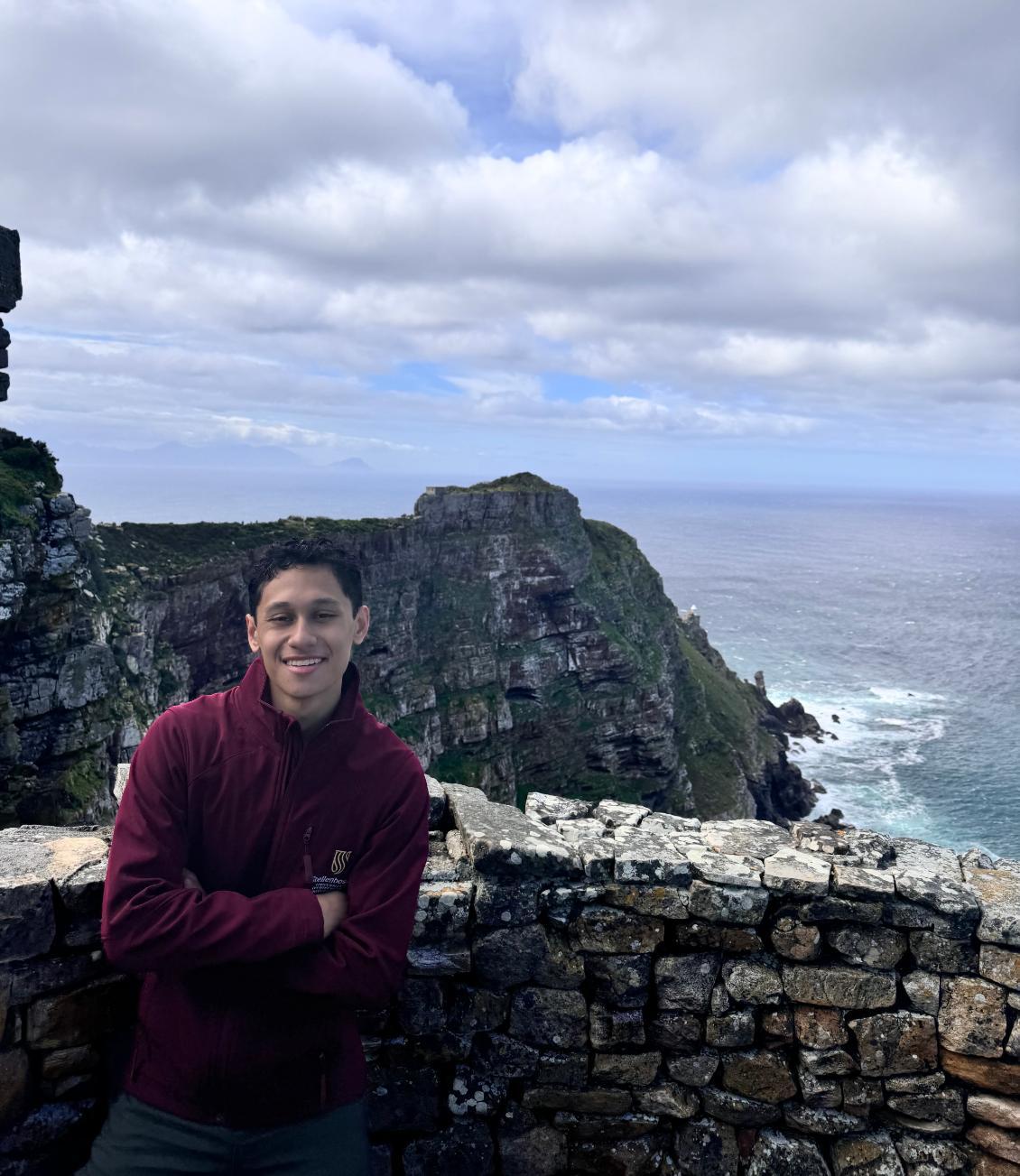
“The conference was a breath of intellectual fresh air, where social justice was not just a topic but embedded in policy designs, often drawing on [philosophers] Rawls, Sen and Crenshaw,” Lee said in a feature for SeattleUAbroad social media. “It was my first glimpse into how South African philosophy is deeply intertwined with its political projects—a perspective that has reshaped how I see justice and policy.”
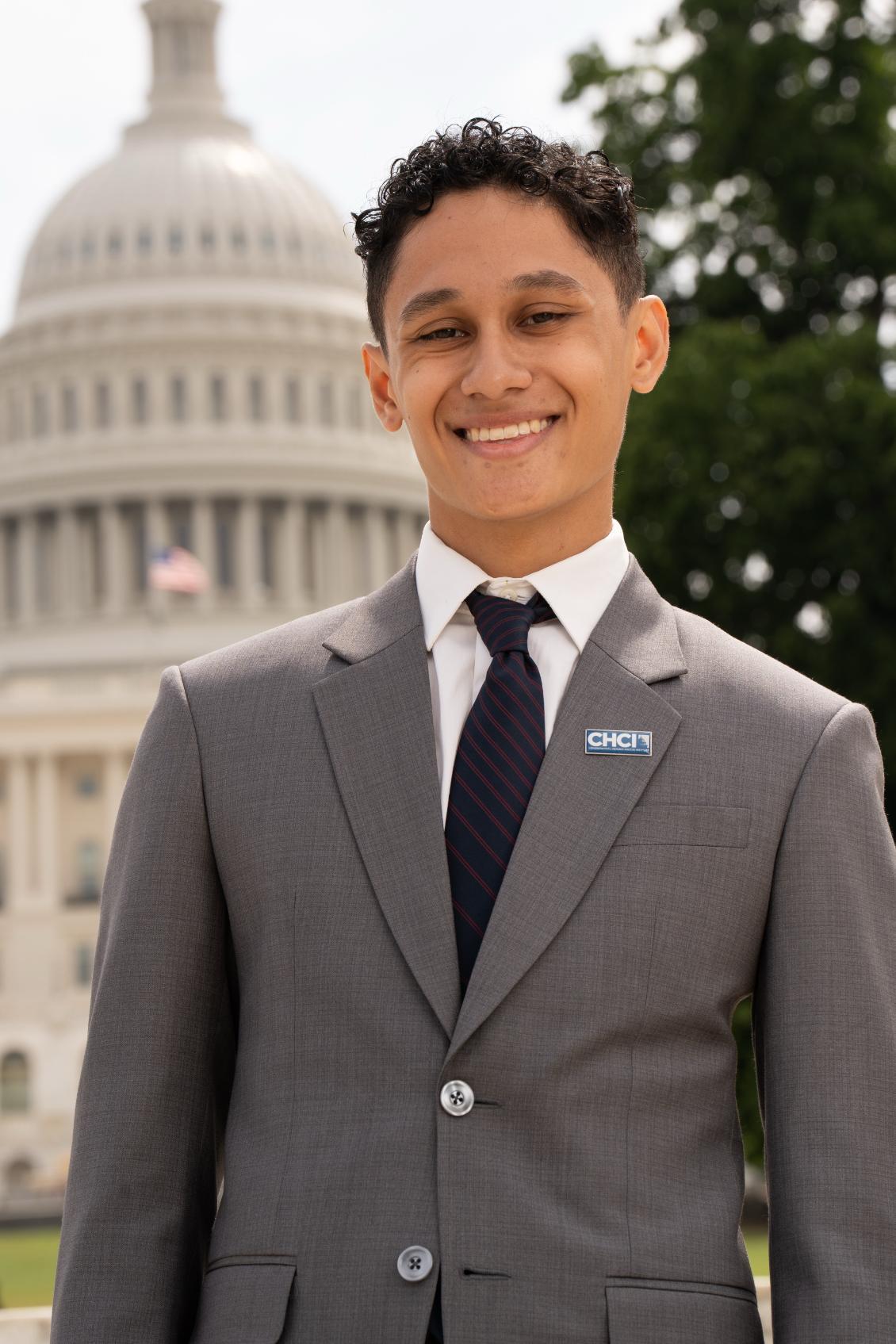
After taking his final exams in May at Stellenbosch University, Lee’s adventure wasn’t over. Less than a week later, he began orientation in Washington, D.C., as a summer congressional intern for the Office of Congresswoman Luz Rivas, who represents Northeast Los Angeles.
Lee was one of 28 students selected nationwide for the Congressional Internship Program through the Congressional Hispanic Caucus Institute, which has a 5 percent acceptance rate and includes full room and board, travel expenses and the ability to choose which office to work for.
“I chose Congresswoman Rivas because I wanted to work for non-legal background office and engage with more pertinent topics like climate adaption, environmental permitting and AI applications yet still be relevant to Latino community,” says Lee. “The cultural part of being a minority and Latino on the hill during this specific time was a privilege and a calling. The office I work for received calls about ICE raids, with families being separated. I realized there’s some deeper reason why I am here.”
As an intern, Lee fielded calls, memos and briefings on a wide range of policy issues. Northeast Los Angeles is at “the intersection of everything,” according to Lee, as it encompasses everything from tech innovation to climate adaptation to forest management. For example, this could be looking at policy for electric grids that utilize artificial intelligence. His work involved drafting memos for hearings, reviewing co-sponsorship requests for the legislative team and leading tours at the U.S. Capitol.
Now back in Seattle finishing his senior year, Lee is taking inspiration from his time abroad and in D.C. for his senior thesis focused on philosophy, policy and non-standard propositional semantics. Expanding on a class he took at Stellenbosch, he will examine policy analysis methodologies and the process of encoding and communicating evidence and ideology.
As for the future, Lee plans to work as a legislative aide in the California Legislature with the eventual goal of becoming an appellate attorney focused on constitutional issues. As he continues his journey of discovery in philosophy and politics, one phrase from Lee's professor in South Africa has become his motto when faced with a challenge: “Before you do the complex things, do the simple things.”
Similar News & Stories
-
/0x70:1200x828/prod01/channel_34/media/seattle-university/news--stories/images/Shen-Ren-in-lab-with-students-USE-.jpeg)
Building a Research Enterprise
SU NewsNational Institutes of Health awards three College of Science and Engineering faculty prestigious research grants. -
/0x42:2400x1558/prod01/channel_34/media/seattle-university/news--stories/images/STEM-showcase-lead-pic.jpeg)
Research Takes Center Stage
SU NewsCollege of Science and Engineering hosts showcase for STEM-related student and faculty research. -
/0x119:2000x1382/prod01/channel_34/media/seattle-university/albers-school-of-business/news-and-events/albers-news/images/Student-spotlight-Lars-Kaser-SBI-Amazon-Spheres.jpg)
Finding Purpose at Albers: Lars Kaser's Path from High School Participant to Campus Mentor
Campus NewsFinance major Lars Kaser went from Summer Business Institute participant to peer counselor, and now helps first- and second-year students build their leadership skills.