Reuse, Compost & Recycling
Learn where to dispose of waste at Seattle University and how to donate items.
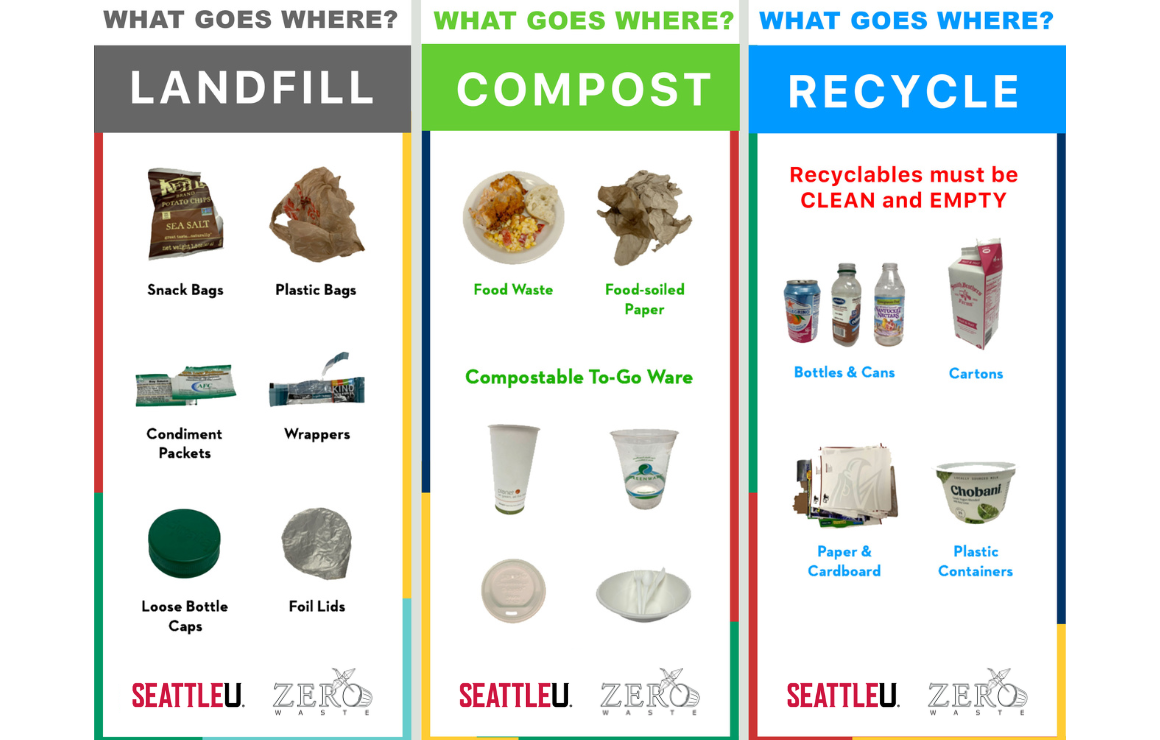
Follow the guide below to find out “what goes where” on campus. For any questions about waste disposal and management at Seattle University, contact Nathan Wolk, Recycling Coordinator and Compost Technician, at wolknathanie@seattleu.edu.
/0x0:860x860/prod01/channel_34/media/seattle-university/iejs/campus-sustainability/images/Reuse-Checkerboard-Image.png)
Reuse and Donations
- Use the reusable items bins located in the lobby of residence halls to donate the following items:
- Clothing
- Electronics
- Small appliances
- Books
- Office supplies and equipment
- Use the Buy Nothing feed on ConnectSU to exchange items for free among your fellow Seattle University Students
- Use a durable, washable container when you take food to-go from Redhawk Dining with the Reusables program
/0x0:860x860/prod01/channel_34/media/seattle-university/iejs/campus-sustainability/images/Compost-Icon.png)
What goes in the green compost bin?
- Any and ALL food scraps
- Food-soiled paper (like paper plates or pizza boxes) and compostable to-go ware
- All to-go ware from Seattle University dining, cafe, and catering services. This includes paper to-go ware, and disposable utensils, cups, and straws.
- Plant and yard waste
- Look out: Coffee cups from off-campus cafes may not be compostable. Check the label or ask the barista if cups are compostable before disposing.
- Learn about what you can compost with information from Seattle Public Utilities
/0x0:860x860/prod01/channel_34/media/seattle-university/iejs/campus-sustainability/images/Recycle-Icon.png)
What goes in the blue recycle bin?
- All recyclables must be clean, dry, and empty
- Paper: All colors, coated cartons and cups too. Must be dry (wet, food-soiled, or shredded uncoated paper goes in the compost bin)
- Cardboard: Flatten and place next to a recycling bin
- Plastic: Must be empty, clean and dry. Loose lids must be 3 inches or wider
- Metal: All types of empty metal containers and scrap metal
- Glass: All types of empty glass containers
/0x0:860x860/prod01/channel_34/media/seattle-university/iejs/campus-sustainability/images/Landfill-Icon.png)
What goes in the brown landfill bin?
- Non-recyclable and non-compostable items like snack bags, plastic bags, condiment packets, wrappers, loose bottle caps, items smaller than 3 inches, and foil lids
/0x0:860x860/prod01/channel_34/media/seattle-university/iejs/campus-sustainability/images/Hard-to-Recycle-Icon.png)
What to do with items that are hard to recycle?
- Faculty and Staff:
- Submit a work order to recycle...
- Batteries & small electronics
- Reusable items to donate (office supplies and equipment, textiles, books)
- Plastic film products: If you can stretch the plastic easily with your thumb, it is most likely recyclable. Collect stretchable plastic consolidated into another plastic bag before submitting a work order
- Styrofoam
- Toner and printer cartridges
- Scrap metal
- Submit a work order to recycle...
- Recycle confidential documents in a confidential recycling bin. These bins are typically in office suites; contact your department's administrative staff to learn where your bin is located.