Online Master’s in Business Administration
Rise to leadership by gaining valued expertise and cross-functional knowledge of global business operations—entirely on your schedule.
Designed for working professionals who want to advance without putting their lives on hold, our flexible online MBA curriculum instills the multi-faceted business acumen that executive positions demand. You'll build proficiency in strategic decision-making, international management, operations, marketing, and finance—all through a values-centered approach that balances ethical leadership with business excellence. Graduate prepared to drive innovation and lead with integrity in a complex global marketplace.

Broaden your network
Our graduates have found career success at leading companies across a wide range of sectors, from technology and aerospace to healthcare and civic government.







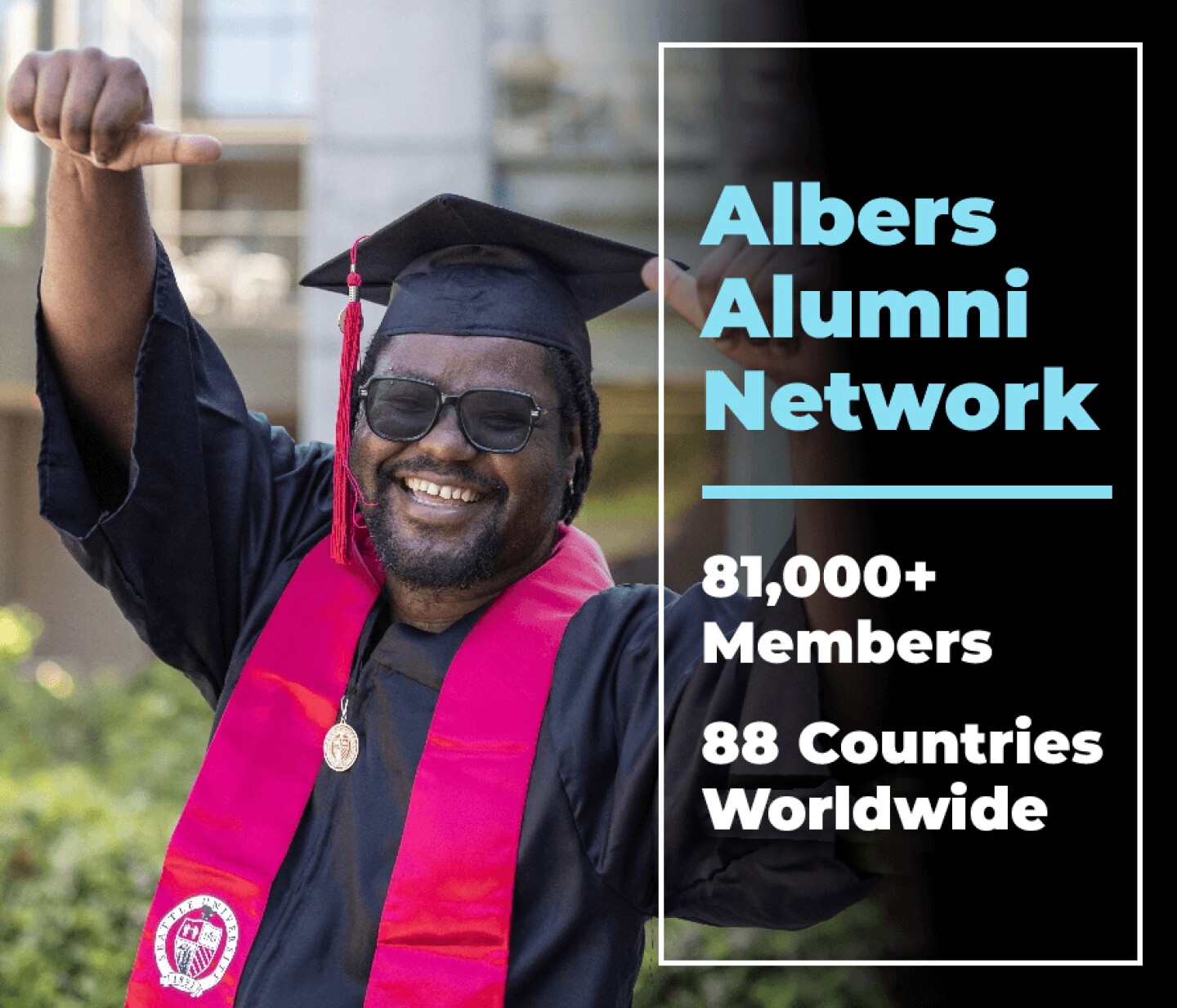
Join our thriving global alumni network
Located in the epicenter of Seattle’s high-powered and progressive business community, the Albers School of Business and Economics resonates with the same energy. We offer you opportunities to meet and learn from Albers alumni and Seattle-area business leaders during classes and networking events.
As an Albers graduate, you become part of our thriving global alumni group that offers lifelong fellowship, networking, and opportunities to give back and pay it forward.
At Albers, we’re committed to balancing ethical and business considerations within each area of study. We challenge you to boldly embrace ethical principles while crafting your approach to sustainable career success.
We elevate business practices and profitability
Values-centered business practices improve profits by increasing customer loyalty and preventing costly mistakes caused by over-indexing on financials.
By contextualizing business in the larger concerns of social justice, environmental sustainability, and public service, we help our students lead for the greater good and a stronger balance sheet.
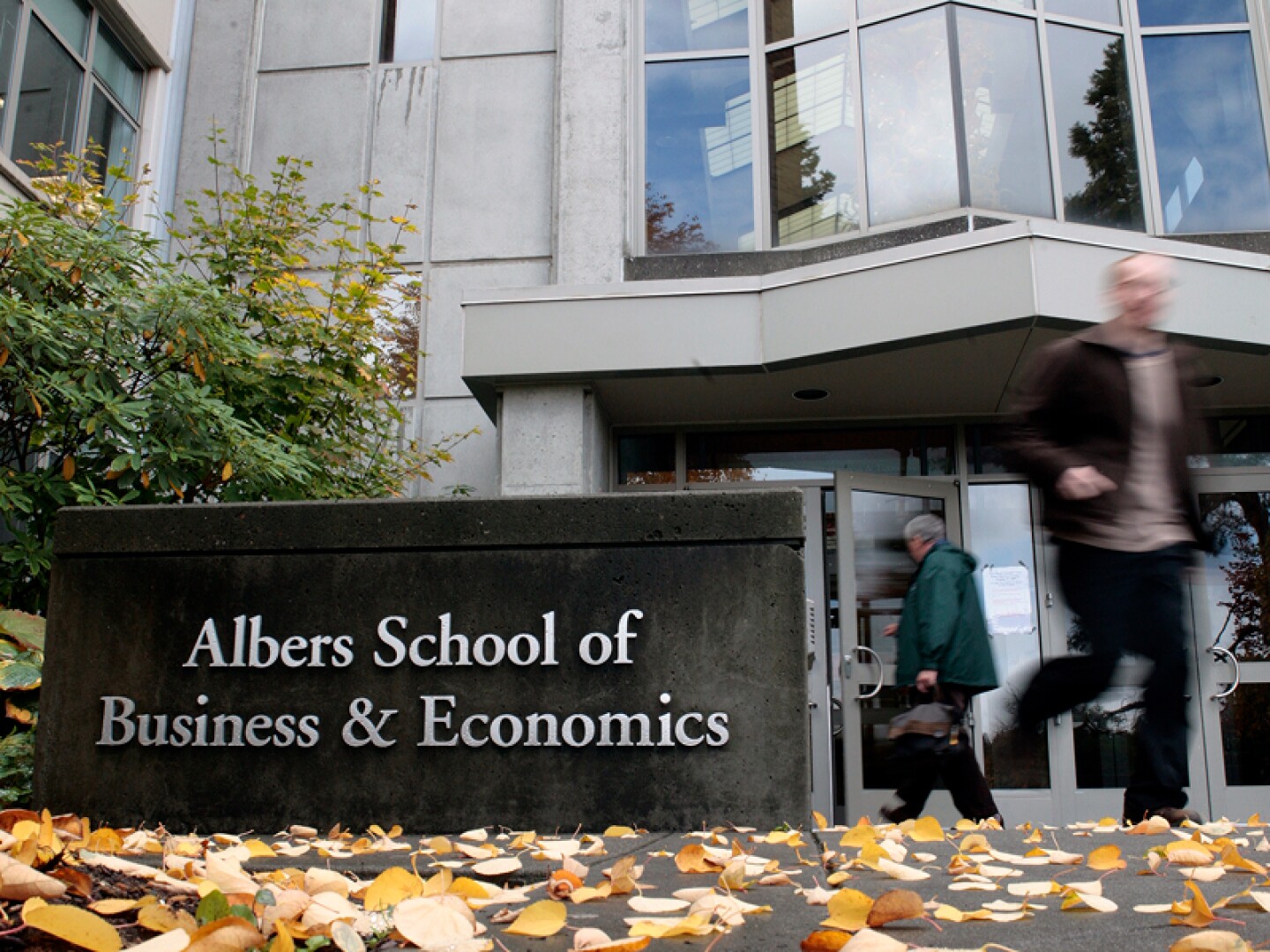
Get a world-class education in our AACSB-Accredited business school
The Albers School of Business and Economics is one of the elite AACSB-accredited business schools. Fewer than 6% of business schools worldwide are accredited by the Association to Advance Collegiate Schools of Business.
AACSB accreditation is based on several criteria for curriculum, faculty qualifications, mission, and more. Learn more about AACSB accreditation.
Benefit from a curriculum built to this high standard, with forward-thinking coursework in decision-making, international management, operations and logistics, marketing, and more.
Choose Albers
Choose Albers School of Business for a powerful education and professional network
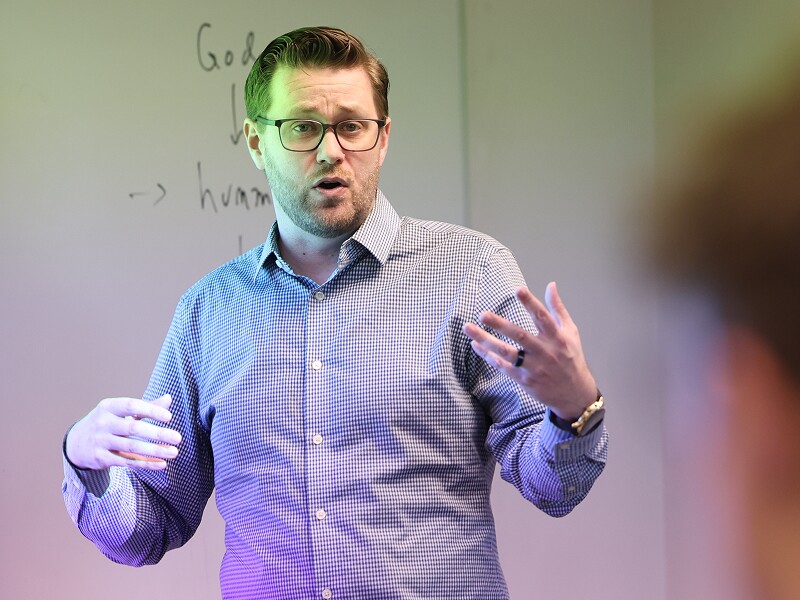
Our diversely talented business faculty, a unique and empowering blend of successful professionals and accomplished academics, will guide and mentor you as you develop your leadership skills.
Video Transcript
To get to where I am today, to get to the Vice President role, to get to work at a great company like Citi, you need that educational background. You need the, you need those credentials, and I believe that by completing this program, it really helped. It really kind of pushed my resume to the front, and people saw that not only does he have an undergrad degree, he also has a Master's in Business and Administration. So, this guy is checking a lot of boxes, and I think that was really beneficial to me because I do see myself as a leader, I see myself as someone that's going to excel, I do want to see myself one day as a CEO. So I need to make sure that I have all my boxes checked.
When I first started taking classes in the MBA program, um, I wanted to be where I am now. So, I started the program, I was an associate, um, working at another bank, uh, and now, two years later, once I completed the program, I am a vice president at another larger, you know, more prominent bank. So, I think all of my goals that I set at the beginning of the program; I've reached them now that I'm at the end of the program. I graduated with a great GPA, great friends, and then I'm reaching my career goals.
Seattle University Albers School of Business helped me by becoming better person, really, especially in a professional environment. I believe that some of the classes that I took really taught me how to be a, a better employee as well as a better employer. Um, and in a professional, in a professional aspect. I took courses on communication. I took courses on how to write emails. And these are, these are courses that very, very important and very, very critical to growing as a professional in the professional world. So, Seattle U really helped me by being a better professional uh, uh, person in whatever industry I'm in.

Challenge-based curriculum helps build your leadership skills.
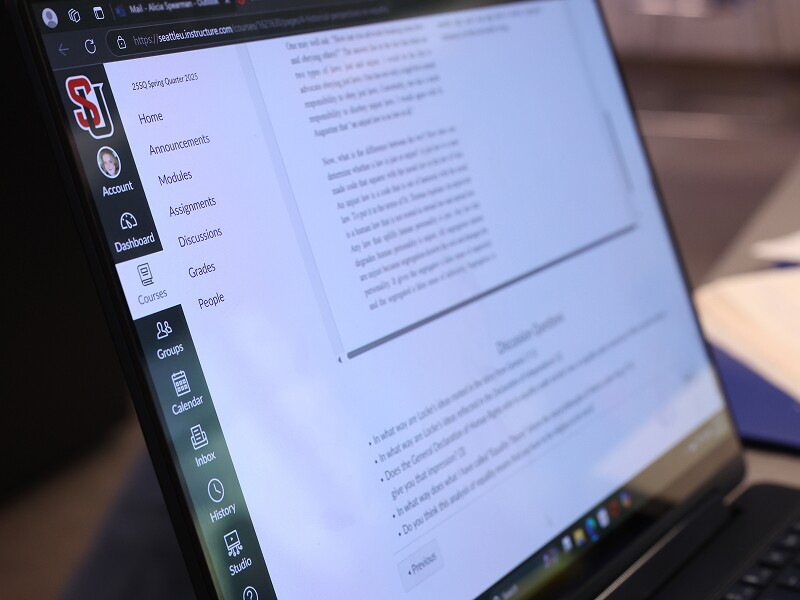
Our Online MBA program offers hands-on learning experiences and leadership challenges to help you develop cross-functional business mastery and the problem-solving mindset critical for effective leadership.
Raise your salary. Increase your security.
Build long-term career success and financial security with an advanced degree from Albers and our enlightened approach to business.
Workers with a master’s degree can generally command a 20% salary premium over those with bachelor’s degrees.1 The median starting salary for MBA graduates in the U.S. is approximately 1.75 times that of bachelor’s degree holders.2
MBA Career Outlook
Stand above the competition with the ethics-infused strategic and management skills you will gain at Albers School of Business. Demand for MBA skills is spiking in response to business disruptions caused by global events and uncertainty.
Learn more about typical entry-level roles and salaries.
MBA Salary Potential
Unlock insights and opportunities as you learn with industry insiders.

Networking
See how we work it
Faculty
Meet the faculty
Student Experience
Preview the Experience
- Retrieved on November 19, 2024, from nces.ed.gov/programs/coe/indicator/cba/annual-earning
- Retrieved on November 22, 2024, from gmac.com/-/media/files/gmac/research/employment-outlook/2024-corporate-recruiters-survey/2024_gmac_crs_report.pdf
- Retrieved on November 22, 2024, from glassdoor.com/Career/management-consultant-career_KO0,21.htm
- Retrieved on November 22, 2024, from glassdoor.com/Career/non-profite-executive-director-career_KO0,30.htm