Beyond the Game: Sports as a Driver of Economic Growth in Seattle
Sunday, March 29, 2026
/190x0:3011x1800/prod01/channel_34/media/seattle-university/albers-school-of-business/news-and-events/albers-news/images/Economic-Impact-of-Sports-Panelists.jpg)
At the final Albers Executive Speaker Series, leaders from government, business, and the sports industry, the panel explored how athletics shape the city not just on game day, but across its entire economic landscape.
When Seattle hosts a major sporting event, the impact reaches far beyond the stadium. It shows up in small businesses opening earlier, in infrastructure decisions made yearsjo in advance, and in the opportunities created for the next generation.
That broader perspective anchored the final Executive Speaker Series event of the academic year at the Albers School of Business and Economics. Bringing together leaders from government, business, and the sports industry, the panel explored how athletics shape the city not just on game day, but across its entire economic landscape.
Dean Dan Turner set the tone early, emphasizing that leadership is not abstract. It is hands-on and rooted in community impact. While business education often focuses on the intersections of technology, markets, and innovation, he noted that sports uniquely bring all of these forces together in ways that directly shape a city’s trajectory.
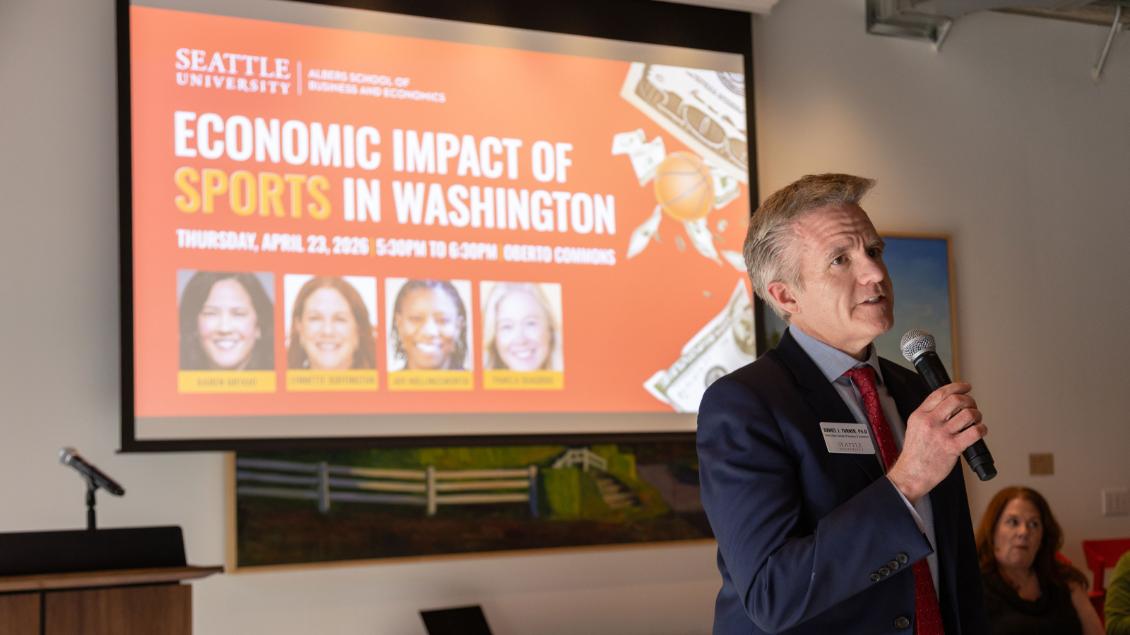
Moderated by Karen Bryant, founder of Suite J Consulting and a 30-year veteran of sports leadership, the conversation moved seamlessly from big-picture strategy to on-the-ground realities.
Turning Opportunity into Action
For Lynnette Buffington, Chief of Staff for the Seattle Metro Chamber, the sports economy is not about occasional surges in activity. It is about consistency.
“We look at sports as economic infrastructure. They create predictable economic activity,” Buffington explained. “As a whole, sports is not a silver bullet, nor is it a luxury for the economy. It's a tool. And so the outcome depends on how intentionally we use it, who holds the risk, and whether success is determined narrowly or broadly.”
That intentionality becomes especially critical as Seattle prepares to host matches during the 2026 FIFA World Cup, an event projected to generate an $846 million economic impact for King County. But as Buffington emphasized, opportunity alone does not guarantee success for local businesses.
“Just because there is foot traffic outside your doors, it is still on you to bring those customers across the threshold,” she said. “If games are at noon and you don't have TVs, try opening for breakfast instead to capture that early audience. You have to be nimble, creative, and get ahead of the game.”
Through readiness playbooks and monthly webinars, the Chamber is working to help small and micro businesses translate global attention into local growth.
Decisions That Shape Decades
If the World Cup represents the future, Pamela Quadros, Chief Operating Officer of the Seattle Sports Commission, reminded the audience that today’s opportunities are often the result of decisions made decades ago.
She pointed to a missed opportunity in the 1980s, when Seattle was excluded from World Cup consideration because the Kingdome lacked an outdoor grass pitch. When Lumen Field was financed in the late 1990s, leaders made a deliberate choice to ensure it could accommodate regulation soccer, a decision that ultimately helped secure Seattle’s role as a 2026 host city.
That kind of long-term thinking continues to define how the region approaches major events. Public-private partnerships have become a cornerstone of development, allowing the city to move quickly while sharing risk.
Joy Hollingsworth, President of the Seattle City Council, pointed to Climate Pledge Arena as a leading example. The project was largely privately financed, with the ownership group assuming construction risk while also investing in the community through the One Roof Foundation, which is helping fund renovations to Memorial Stadium for Seattle Public Schools.
“I’m always a proponent of asking: what are our intended outcomes and how can we get there?” Hollingsworth said. “Often, utilizing private investment and philanthropy allows us to move quickly and get things done.”
At the same time, Quadros noted that Seattle operates in a highly competitive global landscape. While the Seattle Sports Commission works with a relatively modest $2 million budget, other cities often rely on significantly larger public investments, such as Vancouver’s $30 million support for the Invictus Games. Competing effectively, she suggested, will depend on Seattle’s ability to collaborate strategically and maximize its resources.
Who Benefits from the Sports Economy?
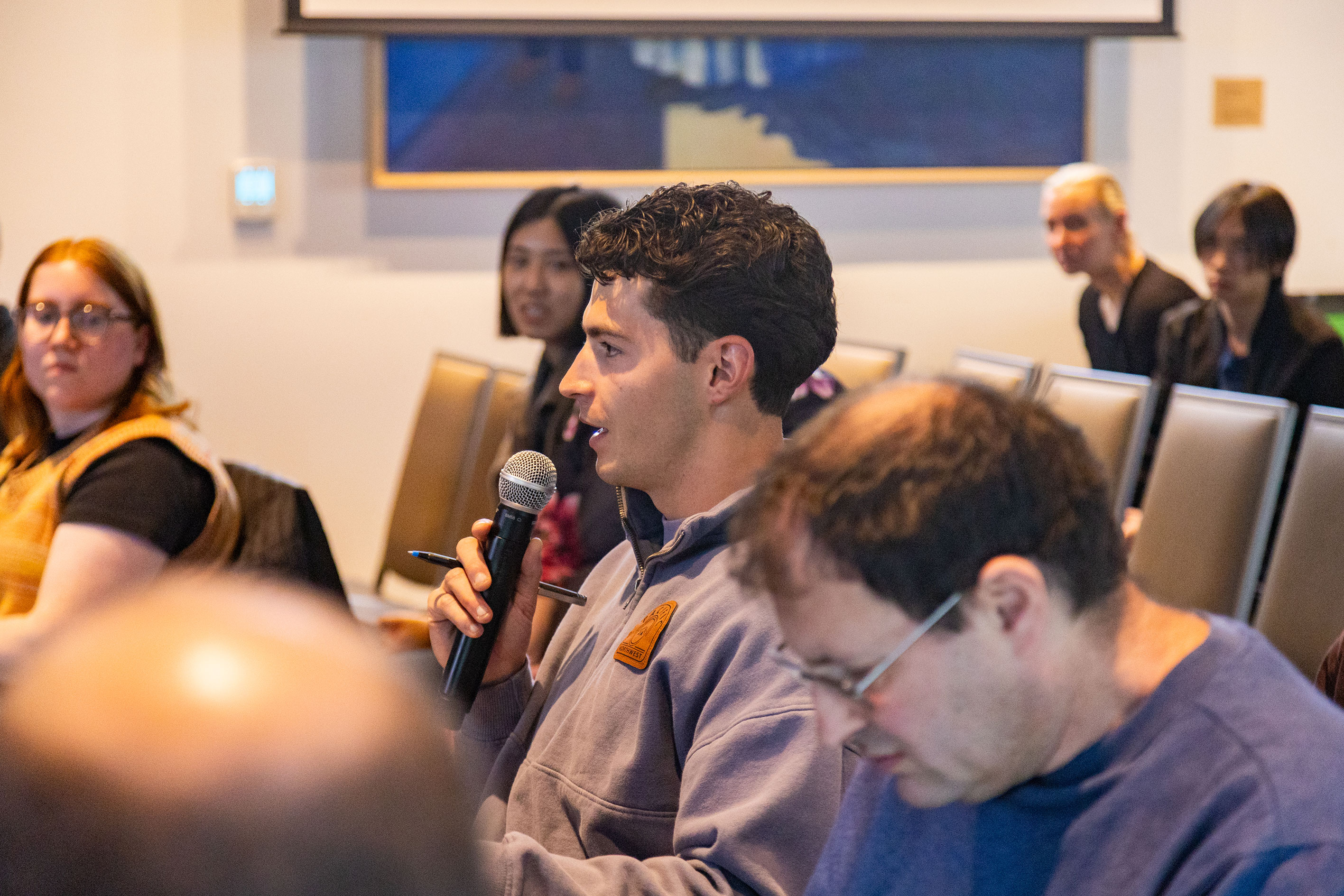
As the conversation shifted from economics to impact, the panel returned to a central question: who is the sports economy really for?
“Sports should not be a privilege,” Quadros said. “It should be accessible to everyone, because the journey has shown that children that have that experience have a different trajectory in life.”
For Hollingsworth, that principle is reflected in the city’s infrastructure. She highlighted a stark disparity: girls’ high school softball teams in Seattle are rained out significantly more often than boys’ baseball teams due to inferior field conditions.
“What are we telling girls in infrastructure investing?” she asked. “I'm making it my mission to turf everything in Seattle.”
Addressing these inequities, panelists noted, requires both policy action and sustained investment. Quadros emphasized the importance of directing legacy funds from major events into youth programs and building a stronger pipeline of female coaches, ensuring that the benefits of the sports economy extend to the next generation.
Navigating Growth and Complexity
With growth comes complexity. As Seattle’s sports economy expands, so do the demands on its infrastructure and businesses.
Hollingsworth pointed to the challenge of balancing freight mobility for one of the nation’s busiest ports with a surge in pedestrian, scooter, and bike traffic downtown. These competing needs illustrate how deeply sports and urban systems are intertwined.
The discussion also touched on the rapidly evolving Name, Image, and Likeness (NIL) landscape. With many local businesses already experiencing sponsorship fatigue and youth teams struggling to secure basic support, panelists agreed that expecting small businesses to meaningfully fund collegiate athletes is, for now, unrealistic.
The NIL market, they noted, is still developing and will require time and innovation to integrate into Seattle’s broader sponsorship ecosystem.
Looking Ahead
By the end of the evening, one idea stood out: sports are not just moments of entertainment. They are long-term investments in a city’s economy, infrastructure, and people.
As Seattle prepares for a global spotlight in 2026 and beyond, the challenge is not simply to host events, but to do so with intention, ensuring that the benefits are shared widely and sustained over time. Conversations like this one also reflect how business education is evolving alongside the industry, with programs such as Albers' Sport and Entertainment Management MBA preparing future leaders to navigate and shape this dynamic field.
In that sense, the business of sports is not just about what happens on the field. It is about what happens around it and who gets to be part of the game.
Similar News & Stories
-
/38x0:1156x706/prod01/channel_34/media/seattle-university/news-amp-stories/images/Semester-wins-CCE-photo.jpeg)
Community and Deeper Learning
SU NewsSeattle University’s transition to a semester calendar will help strengthen service and neighborhood partnerships. -
/0x19:1130x733/prod01/channel_34/media/seattle-university/news-amp-stories/images/Engaging-Seattle-photo-one.jpg)
Engaging Seattle Conference Brings Community Together
SU NewsWorking toward a more just city, community and campus audiences convene for an inaugural event. -
/0x41:2400x1557/prod01/channel_34/media/seattle-university/albers-school-of-business/news-and-events/albers-news/images/Albers_HarrietS_BusinessPlanComp_tj_021.jpg)
Path to Leadership: Jennifer Keough’s Journey from Working Student to Empowering Future Founders
Campus NewsThe three-time Seattle University alumna and JND CEO launches a new award to eliminate financial barriers for graduate entrepreneurs.