The Art of Saying Yes: Greg Magnan on Cross-Functional Thinking
/119x0:1882x1125/prod01/channel_34/media/seattle-university/albers-school-of-business/news-and-events/albers-news/images/Greg_Magnan_Story.png)
An inside look at Greg Magnan’s student-centered approach—blending supply chain expertise, systems thinking, and technology-driven engagement to ignite lasting learning.
Back in 1985, Greg Magnan was chasing discs on the ultimate frisbee field and figuring out life on his terms. He didn’t know it then, but this free-spirited mindset that shaped his early years would one day become a cornerstone of how he teaches and leads at Seattle University’s Albers School of Business and Economics.
Now a professor of Operations and Supply Chain Management, Magnan brings that same energy into the classroom—encouraging students to break down silos, work across disciplines, and approach business problems with creativity and curiosity.
With a PhD from Michigan State University and more than three decades at Seattle University’s Albers School of Business and Economics, Magnan brings deep expertise in operations, supply chain management, and cross-functional leadership to every classroom he enters. His approach invites students into a fast-paced, collaborative journey that redefines what an MBA can be: an engaging, continuous adventure.
From Frisbee to Faculty: Greg Magnan’s Unexpected Path to Academia
Magnan never planned to become a professor. Academia wasn’t even on his radar until graduate school forced him to face the possibility head-on.
When looking for a program where he could continue playing ultimate frisbee, Magnan learned about a doctoral assistantship by chance. A department chair offered him a conversation that changed everything. “It was a 30-minute meeting that turned into two hours of just talking about academic lifestyle,” he recalls.
Within just ten minutes of his first class, Magnan knew he had found his unexpected calling in academia. “I completely lucked out and stumbled into my jam,” he says.
His path led him to earn a PhD at Michigan State University, where his research on supply chain relationships would lay the foundation for a prolific academic career. Over the years, he has published award-winning work in leading journals, and his contributions continue to shape how institutions think about strategic partnerships and supply chain systems.
That early clarity is something he looks back on with gratitude—and a bit of humility. “My kids always say, ‘You’re not the best example, Dad. You found your thing right off the bat,’” he laughs. “And they’re right. I did. You’ve got me!”
While he knows his path was unusual, it’s that experience of unexpectedly ‘clicking’ with something new that he encourages his students to chase. Whether or not they find it as quickly, he believes the process of exploring—and staying open to what might surprise you—is what education is really about.
Driving Student Success: Magnan’s Impact at Seattle University
From the moment he started teaching, Magnan knew he wanted to do more than stand in a classroom and lecture. His goal has always been to spark those transformative light-bulb moments, where curiosity meets clarity and learning becomes personal. At the heart of it all is a simple motivation: to make a lasting impact, both in the lives of his students and in the broader academic community. This commitment to creating student-centered, high-impact experiences has not only shaped his teaching philosophy but earned him some of Seattle University’s highest honors, including the Alumni Distinguished Teaching Award and multiple Beta Gamma Sigma Professor of the Year recognitions.
Magnan’s teaching spans a wide array of subjects—creativity and innovation, sustainability, project management, operations and supply chain management, systems thinking, strategy implementation, and responsible leadership—giving students a rare opportunity to explore business challenges from multiple vantage points. Whether in undergraduate, MBA, or executive classrooms, Magnan equips students to think holistically and act ethically in complex environments.
Teaching Without Boundaries: Breaking Down Silos in Business Education
What sets Magnan apart is his refusal to stay within the confines of a single discipline. With over 40 years of teaching experience across multiple business disciplines, he sees silos as obstacles to student success. He constantly prompts students to connect concepts from different courses—demonstrating how a financial tool might apply in an operations decision, or how a marketing strategy affects supply chain dynamics. His goal is to normalize cross-functional thinking and make it second nature.
“I really want them to begin to be a systems thinker,” he says. “To see how things are connected. Because later in life, once you have collected these various experiences, you’ll have more to draw from to make better decisions and become a more complete leader.”
He brings this systems mindset to life through case studies and real-world examples that trigger the kind of light-bulb moments 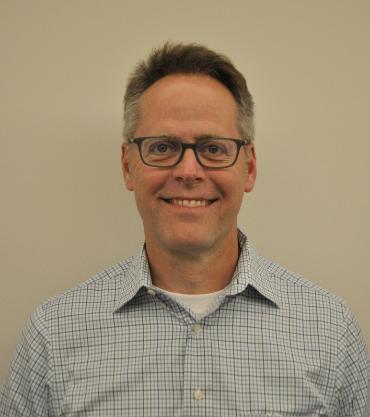 students remember long after the class ends. One example: He uses Starbucks’ ever-expanding menu to illustrate how a seemingly simple marketing choice can send ripples across the entire organization.
“Adding more choices sounds like a good idea from a customer experience or branding perspective,” he explains. “But those decisions ripple through supply chain, finance, HR—everyone feels it, including by waiting longer for their orders.”
Drawing from his expertise in supply chain management, Magnan helps students see how upstream decisions influence downstream outcomes—whether that’s a shift in vendor strategy or a change in product assortment. His real-world insight gives case studies a level of depth that prepares students for the messy, interconnected nature of modern business.
By walking students through how a single department’s decision affects cost forecasting, vendor contracts, employee training, and inventory management, Magnan challenges them to see business not as a set of separate parts, but as a living, breathing system. “It’s never either/or,” he emphasizes. “It’s always ‘and.’ If I can help them see those connections earlier, they’ll become more effective leaders over the next 20 years.”
And in the LEMBA program, that systems-level thinking spreads far beyond the classroom, amplified by every student who takes those into their organizations and industries. Viewing leadership challenges through the lens of systems, diagnosing the issues, leveraging other voices and performing quick experiments can result in powerful change.
Meeting Students Where They Are: Improving Classroom Engagement Through Technology
Magnan’s desire to break down barriers also shapes how he shows up in the classroom. He recognizes that every student brings a unique set of qualities that can affect how they engage in a traditional academic setting—whether it’s being naturally reserved, navigating language challenges, or needing hands-on experiences to connect with abstract ideas.
Long before online learning became the norm, Magnan was already experimenting with ways technology could level the playing field. And while some were skeptical that Jesuit-style education could be meaningfully delivered online, he welcomed the challenge.
“Some wondered, ‘Can you do it the way we do it—with the secret sauce?’” he recalls. “There were a lot of people who didn’t think you could. I thought, ‘Well, that sounds like a fun challenge.’”
He found a solution in an online learning tool which allowed students to respond to discussion prompts through short video clips. The platform gave them time to reflect, re-record, and show up as their best selves, making space for voices that might otherwise go unheard. It also opened the door for deeper connection, as students began sharing personal experiences that enriched the course in ways traditional classrooms may not allow.
He shares, “In an operations class, I shared an article on deaths due to medical errors. Some students opened up about their own personal experiences and sharing them on the platform. This never happened in a face-to-face setting.” By giving students the time, space, and control to share their stories in their own way, the learning tool created a more inclusive, emotionally resonant learning environment—one where vulnerability and reflection could thrive alongside academic content.
Final Advice: Say Yes to New Opportunities
If Greg Magnan had to distill his career—and his overall approach to life—into a single piece of advice, it would be: “Say yes.”
It’s a simple directive, but one that Magnan believes can open doors in unexpected ways. “There’s something about just saying yes,” he shares. “The biggest opportunities in my life didn’t come because I had some master plan. They came because I said yes when someone asked if I wanted to try something new.”
It’s a mindset he encourages his students to adopt, especially as they wrestle with career uncertainty, shifting industries, or self-doubt. Saying yes, Magnan suggests, doesn’t mean knowing all the answers. It means being open to possibilities you hadn’t imagined yet.
It was the same advice that shaped his own academic path. By saying yes to unexpected opportunities—whether a short-term role, a new skill, or an unfamiliar experience—Magnan gradually built a toolkit he could draw from later. “Years down the line, those pieces come together and lead to something you couldn’t have planned for,” he says.
Whether in the LEMBA program, undergrad courses, or university committees, Magnan hopes his teaching legacy isn’t just a list of recognitions—but a ripple effect of bold choices, sparked by a willingness to lean into the unknown.
As he puts it: “The thrill is teaching, helping people learn, and watching the lightbulb go off.”
Friday, December 5, 2025