AI, Trust and Responsibility: Inside the Albers Center for Business Ethics
Friday, November 13, 2026
Real cases, campus conversations and graduate research prepare Albers students to lead with integrity in the age of AI.
From artificial intelligence (AI) to global supply chains, today's business leaders face ethical questions that rarely come with easy answers. At the Albers School of Business and Economics, the Center for Business Ethics (CBE) prepares students to meet those questions with sound judgment through real-world cases, conversations with industry leaders and research on the issues shaping business today. This work is made possible in part through the generosity of donors who established and contributed to three endowments: the Center for Business Ethics Endowment, the Boeing Frank Shrontz Chair of Professional Ethics and the Brian Webster Endowment for the Center for Business Ethics. With this support, the CBE continues its work, led by its director, Jeffery Smith, with support from graduate assistants Dmitry Startsev and Megha Chauhan.
Ethics at the Core of an Albers Education
Every Albers degree program, undergraduate and graduate, includes a dedicated ethics course. The CBE builds on that foundation by connecting students, faculty and business leaders around the ethical challenges organizations face every day.
"Ethics within the Albers School is foundational to what we do to meet the university's mission," says Smith, Frank Shrontz Chair of Professional Ethics. "We study not only how to be successful in business, but also examine what success means for our shared humanity."
Learning by Doing: Ethics Site Visits
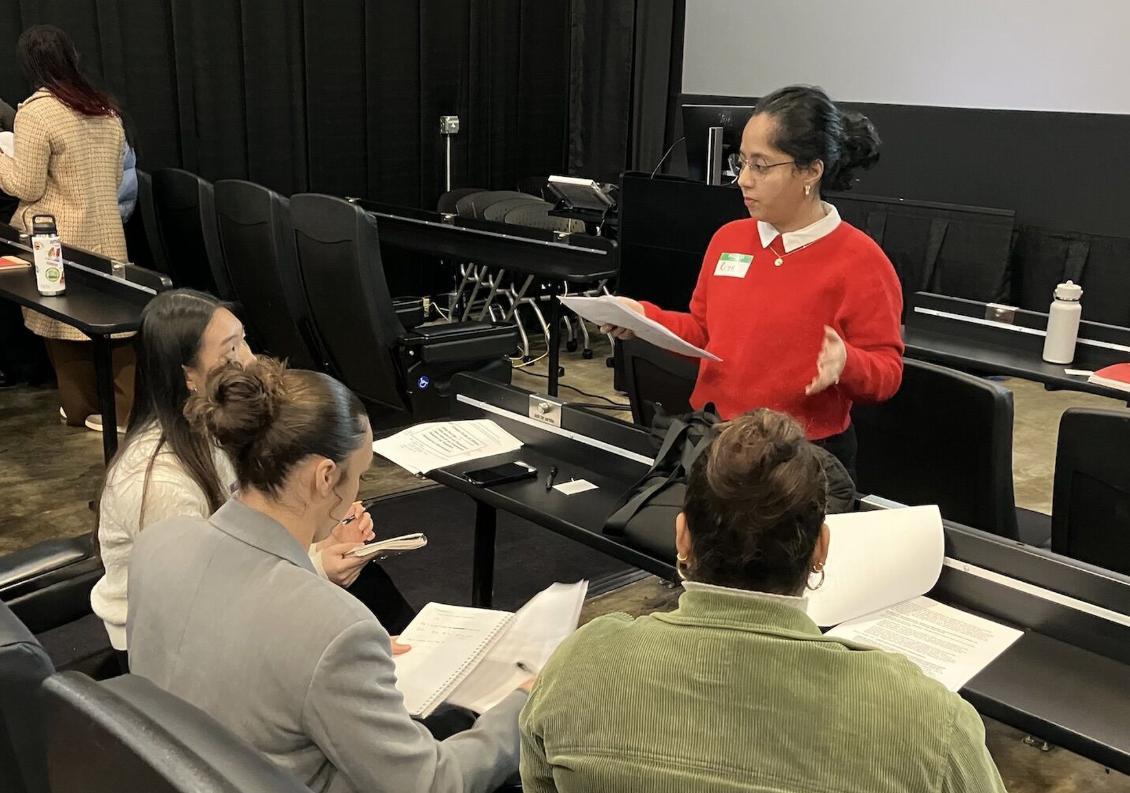
Through its Ethics Site Visits, the CBE brings students inside leading companies to work on real cases. Last year, Albers undergraduate and graduate students visited Costco Wholesale in Issaquah. Working in small teams, they analyzed ethical challenges Costco managers had faced during the pandemic, then presented their recommendations to the managers who had made those decisions.
"That experience—real problems, with real managers—is not something that I can provide in a classroom, let alone in a textbook," Smith says. "In such situations they see and feel how complex real decisions are, how decisions inevitably lead to harm and how to exercise judgment without having a formula."
Bringing Big Ideas to Campus
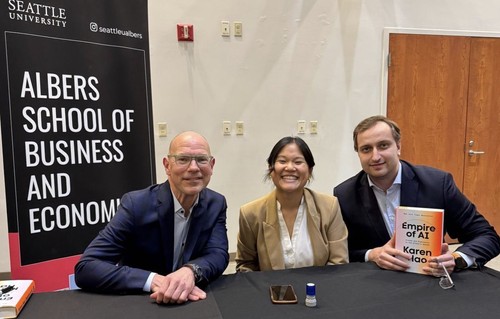
Each spring, the CBE hosts a signature keynote event and campus visit that brings leading voices on business ethics to Seattle University. In March 2026, journalist Karen Hao, author of the New York Times bestseller Empire of AI, joined Professor Peter Rowan for a conversation that drew about 200 attendees. Several Albers courses built her work into their classes.
On April 22, 2027, the CBE will welcome Carissa Véliz, professor of philosophy and applied ethics at the University of Oxford's Institute for Ethics and AI. Her new book, Prophecy: Prediction, Power and the Fight for the Future, from Ancient Oracles to AI (Doubleday, 2026), examines how forecasting and prediction, especially through AI, often serve as an instrument of power that constrains how we make decisions about the world.
Startsev, a Professional MBA and Master of Science in Finance student with more than a decade of experience in banking compliance, helped prepare the teaching notes for her visit.
"This project made me realize that following the law is not always enough," Startsev says. "Companies also need to think about what is fair, how their decisions affect people and how they can build trust with their customers."
Research for Today's Business Challenges
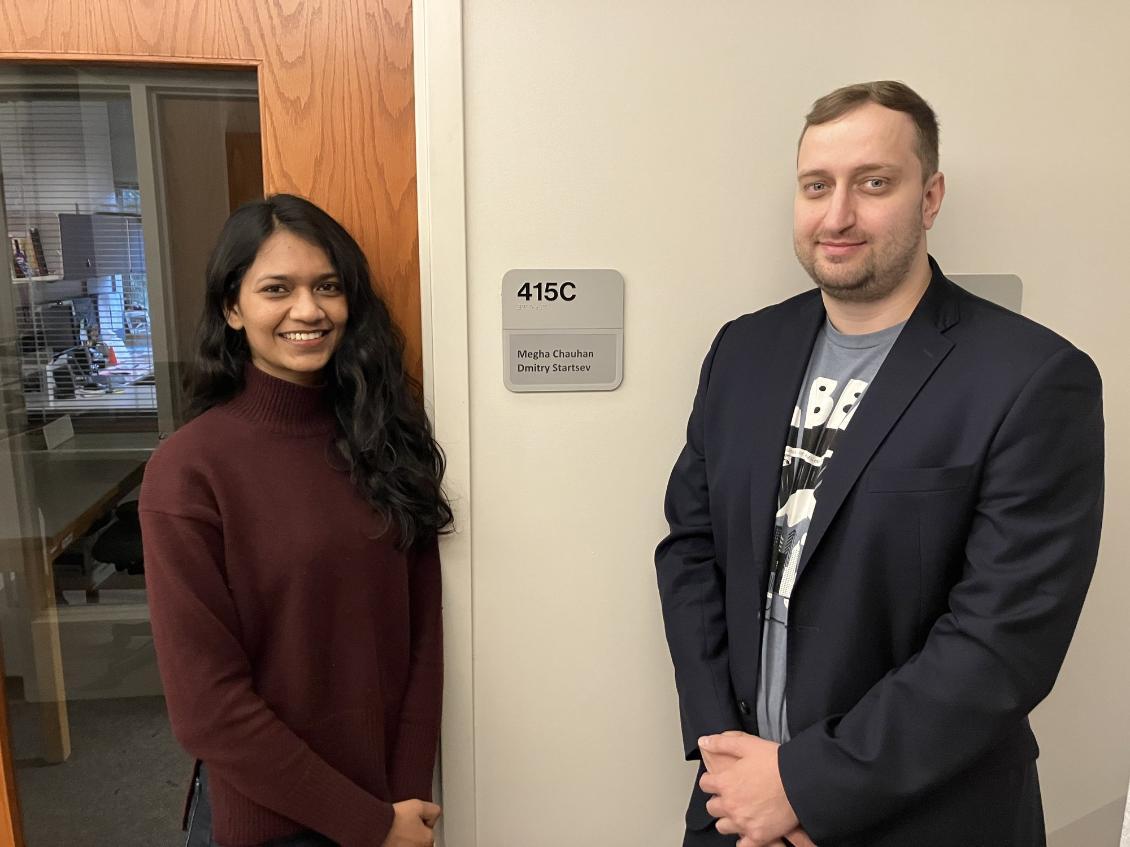
The CBE's graduate assistants, both Frank Shrontz Scholars, support faculty research on emerging ethical issues. Chauhan, a Master of Science in Business Analytics student, came to Albers after working in banking, where she saw why ethics matters.
"Whether I was detecting suspicious transactions or ensuring regulatory compliance, I came to see ethics as the foundation that protects both organizations and the people they serve," Chauhan says.
At the CBE, she is examining the fairness of algorithmic pricing, where AI calculates, recommends or adjusts the price of a product in real time for different customers. She has also researched moral repair, learning how organizations can make things right after causing harm.
"Real moral repair means acknowledging the wrong and respecting the people harmed, not just paying a cost to move on. That shifted my view of ethics from damage control to accountability."
- Megha Chauhan
AI is raising questions inside companies, too. For Smith, one of the most pressing is what happens to the employees AI could replace.
"It is very tempting to see AI as a simple labor cost reduction strategy. Viewing employees as resources to improve AI, rather than costly alternatives to AI, is one way firms can signal responsibility in the age of AI."
- Jeffery Smith
Looking Ahead: Preparing Ethical Leaders
At its heart, the CBE's work is about preparing leaders who weigh not only what they achieve but how they achieve it.
"Today, data-driven decisions shape hiring, lending, pricing and customer outcomes, so knowing what an ethical decision looks like in a given situation matters as much as the analysis itself," Chauhan says.
Startsev agrees. "For me, it is important not only to achieve business goals, but also to think about how we achieve them," he says. "I believe that a successful business should combine strong financial results with ethical behavior, responsibility and respect for people."
Similar News & Stories
-
Building a Research Enterprise
SU NewsNational Institutes of Health awards three College of Science and Engineering faculty prestigious research grants. -
Research Takes Center Stage
SU NewsCollege of Science and Engineering hosts showcase for STEM-related student and faculty research. -
A Historic Investment
Seattle University MagazineEndowed scholarship growth, boosted by generous gifts, affords greater access to a Seattle University education.